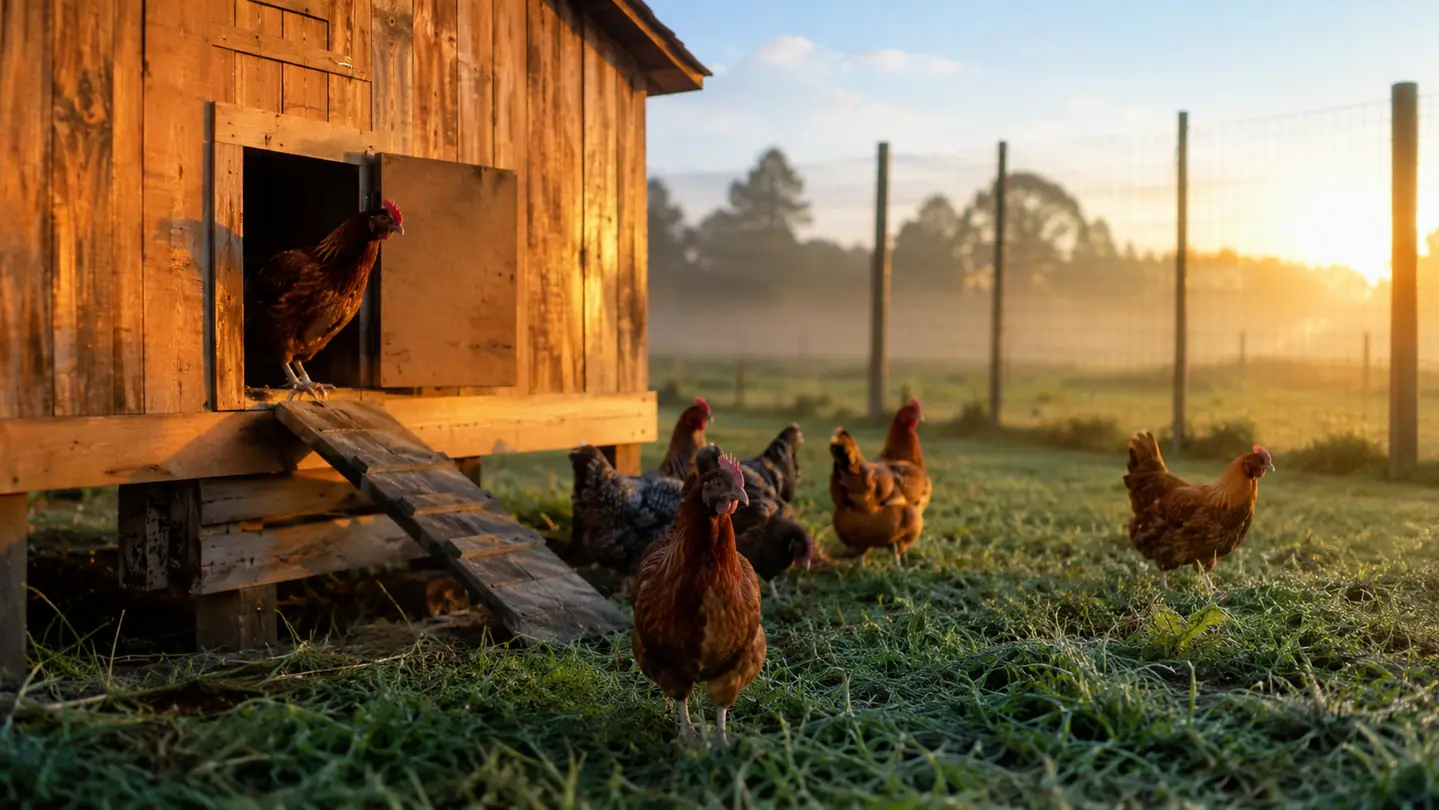
Every spring I promise myself I will be sensible about mornings. Then June shows up, the sky lightens at 6:05, and I am standing in wet grass in my nightgown working a wooden latch by feel while fourteen hens push past my ankles. The goats are already hollering over in the shed. The coffee is going cold on the counter. For five years that was simply what keeping chickens cost me, and I never once added up the minutes.
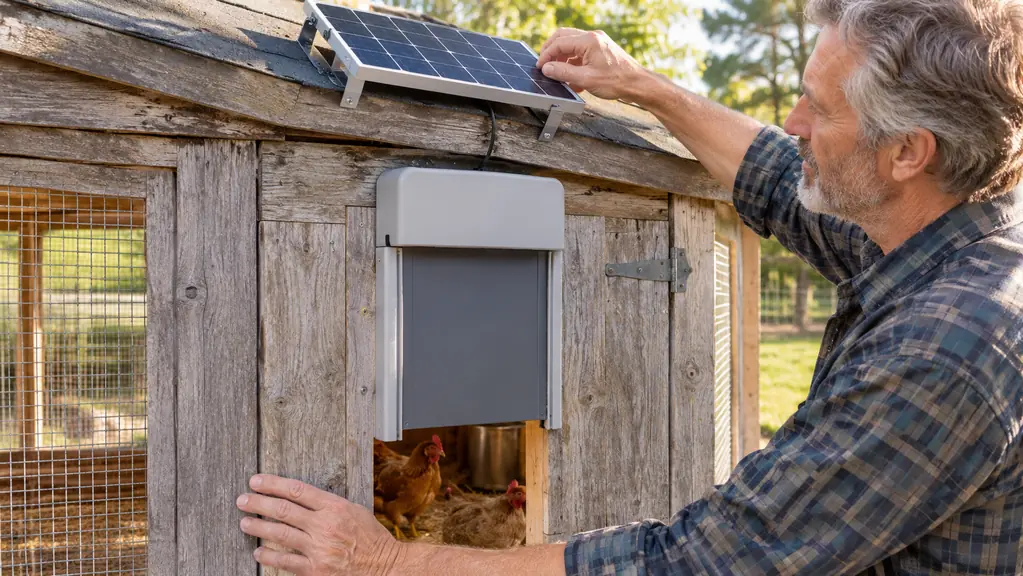
Then in September 2024 a fox took two hens on an evening Ron and I were late getting home. I had sixteen hens that day and fourteen the next morning. I ordered the NyPots solar automatic coop door the following week and mounted it on the pop door of the walk-in coop, with the solar panel up on the roof. What I expected was predator protection. What I did not expect was how much of my morning it handed back. Here are ten reasons, roughly in the order they occurred to me.
Fourteen hens, one door, and nobody waiting on me at dawn
I mounted mine in September 2024 after a fox took two hens. It has opened every morning since, on its own, and closed every evening. Read the details on the listing before you measure your own pop door.
Amazon See the NyPots Coop Door on Amazon →You stop being the 6 a.m. doorman
For five years the flock's schedule was set by whoever got dressed first. Sleep until 6:30 and fourteen hens stood in a dark coop listening to the goats get fed. The NyPots door opens on its own on the light sensor, so by the time I carry the feed bucket out, the pop door is already up and the run is already busy. That sounds like a small thing. It is not. The first job of my day is now feeding animals that are awake and moving instead of releasing animals that are waiting on me.
It closes whether or not you are home by dark
This is the reason I bought it. Hens do not put themselves to bed early, and a fox works the last hour of light. With a manual latch the closing time is whatever time I get home, which in late October can be well after dark. The NyPots door closes on the same light reading that opened it, dusk for dusk, and it does not care whether I am in the kitchen or in Raleigh visiting our son Travis. Ron has stopped asking me at four in the afternoon whether we need to be back. No hens lost since it went in.
The light sensor reads the sunrise so you do not have to
I expected to fiddle with settings every few weeks. Instead I left it on light-sensor mode for most of the year and forgot about it. It reads the changing light the way the birds do, so as the days shorten through September it drifts a few minutes earlier on its own. Nothing to reprogram when daylight saving ends, no clock to reset after a power blink. That is why I stopped thinking about the door at all, which is the highest compliment I can give a piece of equipment bolted to a chicken coop.
Timer mode covers the dark winter mornings
One stretch of last winter we had four gray mornings running, and the sensor opened late enough that the hens were shoving at a shut door while I was already out there with feed. So I switched it to timer mode for a few weeks and set the open time to 07:00. Two minutes of standing in the run with cold fingers, one try, done. In February I put it back on the sensor. If you are home in the mornings and want the birds out at a set hour no matter how grim the sky looks, that is the mode you want.
No wire run, no outlet, nothing to trip over
There is no outlet in my coop and none anywhere near it, so a door that needed power pulled through conduit would have been a nonstarter. The NyPots unit runs off the solar panel, and the box includes the panel and a charging cable to top it off before you mount it. I have not touched that panel since the week I installed it. If your coop sits under heavy shade, that is worth thinking about before you buy, because a panel in shade is a panel doing nothing.
The opening fits real hens, not just a slight bird
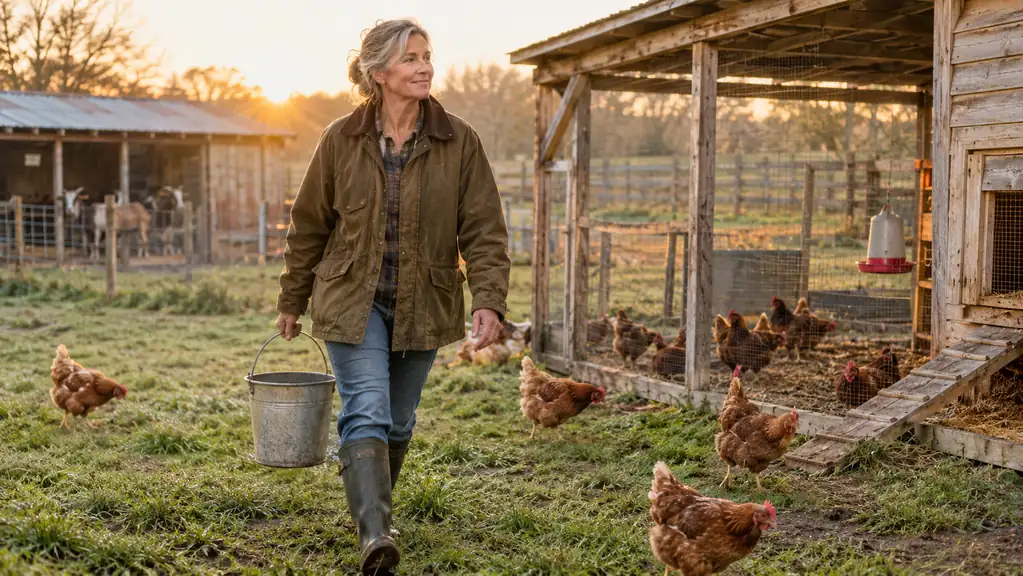
The entrance measures 8.2 inches wide and 9.6 inches high when the door is up. My Buff Orpingtons are wide birds and they walk through without turning sideways or ducking their heads. The listing says it suits poultry weighing under 10 pounds, which covers my flock and would cover ducks or rabbits of similar size. If you keep something heavier than that, measure the bird before you measure the coop. I have watched a hen get stuck in a gap before and it is not an experience I want twice.
Everything you need is already in the box
Mine came with the door, the solar panel, a charging cable, a screwdriver and eight screws. I mounted it on a Saturday afternoon with that screwdriver and a step stool. Ron offered to help and then mostly held the level, which is about right for him. The tricky part was not the hardware, it was picking a spot on the pop door with clean travel so the panel slides without scraping the frame. I measured twice, because I have cut into that coop before and regretted it for a year.
Manual mode for the odd days
Manual mode bypasses the schedule, and I use it more than I expected. In August, when I am out there at seven in the evening scrubbing out the drinker or dragging the watering can around, I want the door open and I do not want to argue with a light sensor about it. Same when a neighbor comes by to look at the goats and wants to see the hens. It is one setting, and I switched it back without reading the instructions twice, which says something for a piece of farm equipment.
At 1.6 pounds it will not drag your pop door out of square
The unit weighs 1.6 pounds and measures 9.6 by 1.6 by 13 inches. My pop door is a light wooden panel in an old walk-in coop, and I had worried that anything motorized bolted to it would pull it crooked over a season. Two years in, it still swings clean and the hinge has not sagged. That is not a promise about your coop, because old wood is old wood. It is what happened on mine, and it is why I stopped worrying about it.
One chore gone off both ends of the day
The honest accounting. Releasing the flock took me four to ten minutes depending on mud, frost, and whether a hen had wedged herself against the door. Closing up took about the same, plus a head count with a flashlight in my teeth. That is a chore gone at each end of the day, every day, in weather I would rather not stand in. I still walk out and look at them, because I like looking at them. I just do not have to do it on their schedule anymore.
No hens lost since it went in, and I have not worked a latch in the dark since September 2024.
What I'd Skip
If you keep three or four hens inside a fenced yard in town and you are home at dusk nearly every night, a manual latch is fine and you can skip this whole category. I would also skip any automatic door, mine included, if your coop wall is flimsy enough that you would be bolting a moving part to a surface that flexes. And I would skip the idea that it replaces a head count. I still walk out at dusk and count fourteen heads, because a door closes the coop and not the run, and a hen left outside is a hen you have lost. It buys back the morning and the evening. It does not buy you out of paying attention, and if something looks off with a bird, that is a call to the vet, not a call to me.
Fourteen heads counted, and not one latch worked in the dark
Two years on the pop door of a walk-in coop in Siler City. Solar panel on the roof, light sensor most of the year, timer for the gray weeks in January. Measure your opening before you order.
Amazon See today's details on Amazon →