
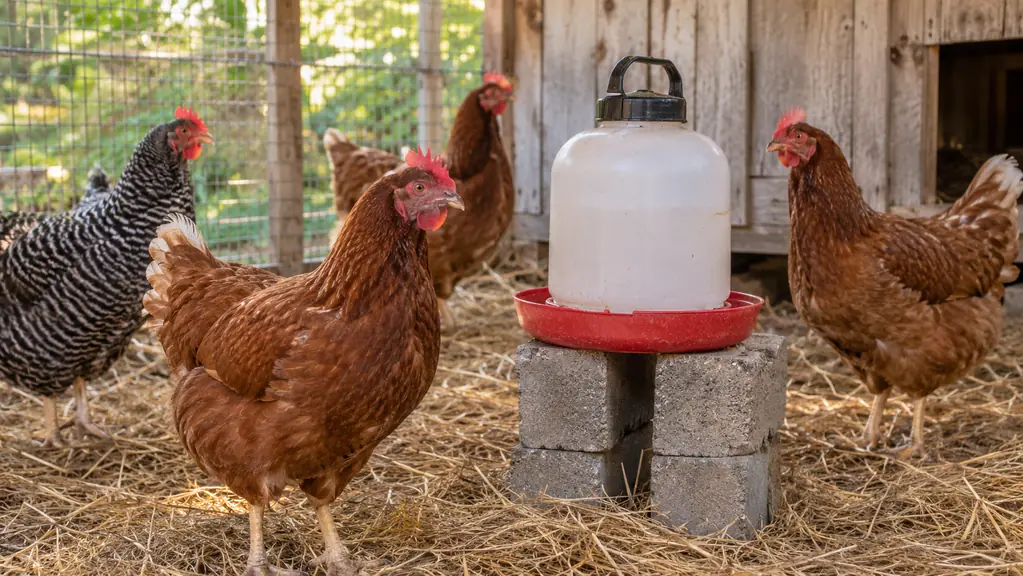
Two summers of carrying a small waterer out to the run twice a day is what finally made me buy something bigger. I keep 14 laying hens in a walk-in wooden coop with a covered run on four acres outside Siler City, North Carolina, and by July those hens go through water faster than I would have guessed. I bought the Harris Farms Easy-Fill Poultry Drinker, the 6.25 gallon size, in March 2024. It has been the only waterer in that run ever since, and I have filled it from a hose in the rain more times than I care to count.
Before that I used two of the small plastic waterers you flip upside down and set on a base. They are fine in April. In August the water goes warm, the base gets tipped, and somebody is always scratching litter into the drinking pan. I tried a rubber tub for about three days. The hens stood in it, and I dumped more water on the ground than I got into a bird. What I wanted was one container I could fill from the top without lifting anything, hold several days of water, and keep the drinking trough up off the litter. That is roughly what I got.
The Quick Verdict
More than a year of daily use, one frozen week and a lot of hose dragging. It fixed the two things that made watering a chore, and it still has two annoyances worth knowing about before you order.
Amazon Check Today's Price →One fill covers my 14 hens for about four days
The 6.25 gallon size is what I run for a flock this size. Current price and size options are on the listing.
Amazon Check Today's Price on Amazon →How I've Used It
The drinker sits on two stacked cinder blocks at the end of the covered run. That was Ron's idea and it was a good one. Raising it puts the drinking trough at about the height of a hen's back, so they reach it without standing in it, and it keeps bedding and droppings from being kicked up into the water. It also means I can set a bucket beside it while I work without bending over. The whole thing weighs about four pounds empty, so two blocks hold it steady even when a hen lands on the rim.
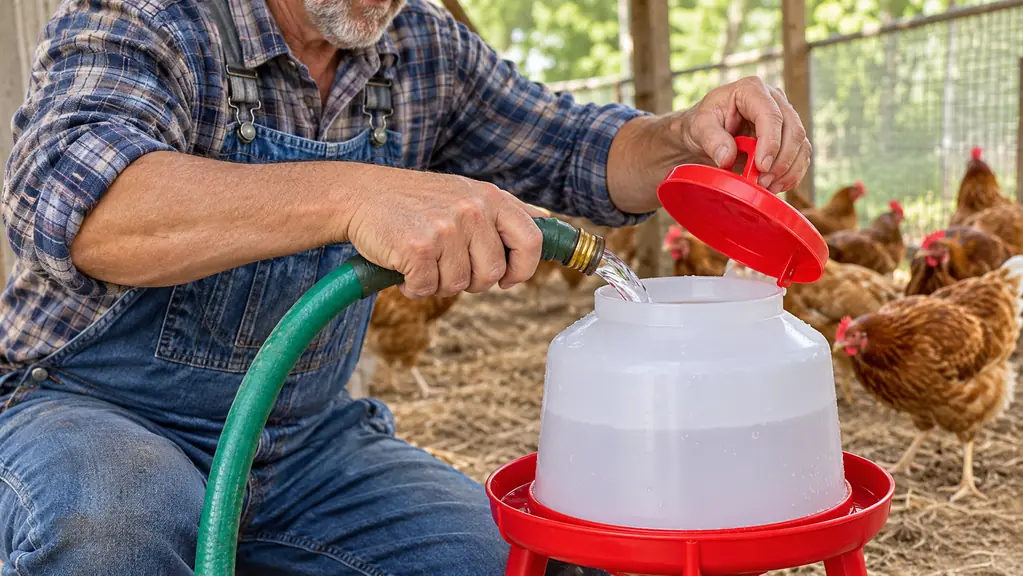
In summer I fill it from the top with a garden hose about every four days. In cooler months it stretches to about once a week. That is for 14 hens with free access all day, through a North Carolina July, which is a fair test of anything. The top-fill lid is the part I care about most. There is no flipping a full container over and trying to set it down without sloshing half of it onto my boots. I open the lid, put the hose in, walk away, and come back when it is full.
I keep a written note on the barn wall next to the milk stand, just a pencil line for each fill, because I wanted to know whether my four day guess was real or wishful. It held about right from May through August. Then September came in cooler, the line spread out to five and six days, and by November I was filling on Sunday mornings out of habit more than need. That little pencil tally is the reason I trust the numbers in this piece instead of just remembering them fondly.
It ran dry on me once, in a stretch of hot days in July when I was distracted by a goat with a sore foot. Nobody died, but the hens were loud about it and I felt like a fool. Since then I look into the trough every morning on my way to the milk stand. It takes about four seconds and it has been enough.
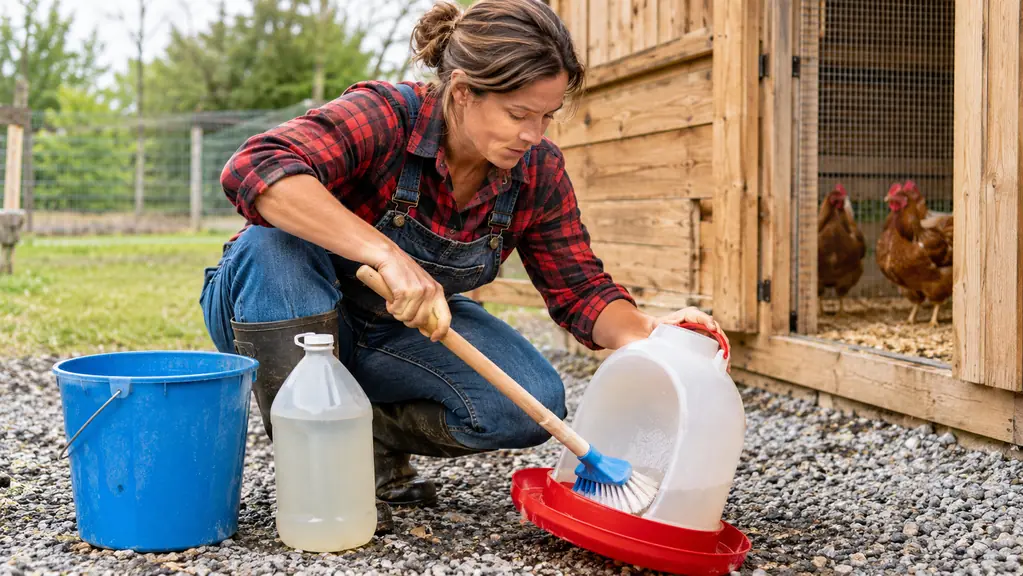
Cleaning gets done every couple of weeks whether it looks like it needs it or not. I dump what is left, scrub the inside with a stiff brush, rinse with a splash of white vinegar and water, and set it in the sun to dry before refilling. Start to finish that is about fifteen minutes. In the heat of summer I do it more often, because standing water in July will grow something if you let it. I do not use anything harsh in it, and I rinse until I cannot smell the vinegar.
The Top-Fill Lid Is the Whole Reason I Kept It
I have owned waterers where filling them was a two person job. You fill the container, hold the base against it, flip the whole thing upside down, and hope the vacuum catches before your shoes are soaked. Doing that twice a day with a sore shoulder is how people quit keeping chickens. The Harris Farms drinker fills from the top, and that is the end of the story. Lid off, hose in, lid on.
The lid is also why I stopped finding drowned bees and floating litter in the trough. Nothing falls in from above. The drinking area is a narrow trough at the base rather than an open pan, so a hen can get her beak in without being able to stand in the water. That one design choice is worth more to me than any other part of the thing, because wet litter in a covered run is how a flock ends up with respiratory trouble, and nobody wants to be calling the vet over something a lid could have prevented.
The lid itself is a simple lift-off cover, and after a year of being taken on and off twice a week it still seats flat. I have dropped it on gravel more than once, once right at Ron's feet while he was carrying a feed bucket, and he has not let me forget it. No cracks yet. The handle area is the only place I see any wear, a slight scuffing where my thumb goes, and that is cosmetic.
What the Float Valve Does, and What It Won't Do
This is a gravity-fed drinker with a float valve inside, the same idea as a toilet tank. Water sits in the reservoir. When the trough level drops, the float opens and lets more through, then shuts off again when the trough comes back up. In practice the trough sits at a steady depth all day. The hens drink it down, the float refills it, and I do not think about it between fills.
What it will not do is keep the water cool or clean itself. It is a plastic reservoir sitting in the sun, and in August the water in it gets warm. I moved mine so the blocks sit under the coop roof overhang for most of the afternoon and that helps some. It also will not tell you when it is low. There is no gauge and no sight window on it. You learn to look into the trough when you walk past, and after a month you know your flock's rhythm well enough to fill before the trough goes dry. If you want something that signals you when it is empty, this is not that product.
One thing I did check, because I am the suspicious type: I filled it on a Saturday morning and marked the trough depth with a fingernail on the outside plastic, then looked again Sunday afternoon in the heat. The level had dropped maybe a quarter inch. The float had topped it back up to the same line by Monday. It is a slow, boring, unremarkable piece of machinery, which is exactly what I want out of a waterer.
The January Morning It Froze Solid
In January 2025 we had a cold snap that stayed hard for several nights. I walked out one morning and the trough was a sheet of ice and the reservoir had frozen from the top down. That is not a defect in the drinker. It is winter, and any open water source on a farm will do the same thing. But you should hear it from someone before your first February rather than after.
My answer was a heated base under the reservoir for the winter months. It sits under the blocks, I run an extension cord from the barn, and I unplug it and put it away in March. With that under it the trough stays open on the worst mornings. If you are not going to run power out to the coop, plan on carrying warm water out once a day in freezing weather and breaking ice, same as you would with anything else. There is no version of this where winter watering becomes free.
That first morning I made it worse before I made it better. I poured a kettle of hot water over the lid to loosen things up, which cracked nothing but did send a sheet of meltwater down onto the blocks and left me standing in a puddle in my barn boots. Ron came out, looked at the situation, and went back in for the extension cord and the base we had bought the year before and never used. Should have started there. Learn from my puddle.
Cleaning It, and the Honest Annoyances
Two things bother me. The first is scrubbing. The opening is wide enough for my hand and a brush, but the bottom of the reservoir is not something you can reach easily with a sponge. A long handled bottle brush does the job. Without one you will be tilting it and swishing, and you will not get the film off the sides. My first attempt, with a dish sponge and a lot of optimism, took twenty minutes and did a worse job than the brush does in five.
The second is the hose. Filling from the top is easy, but you need the drinker somewhere a hose reaches, or you are carrying buckets. Mine sits close enough to the barn spigot that a thirty foot hose gets there with slack to spare. If your coop is at the far end of the property and you do not want to run a hose out there, think about that before you order, because a 6.25 gallon container is not something you want to carry full.
The plastic itself has held up. After more than a year outdoors mine has some sun fade on the lid and no cracks, no weeping at the float, and the lid still seats the way it did in March. The Harris Farms listing says the plastic is BPA free, which mattered to me because the hens drink out of it all day and those eggs end up on my table.
What I Looked At Before This One
I looked at the nipple and cup style waterers, the ones with the little metal fittings the hens peck at. People who run them swear by them, and I understand why, because the water stays covered and clean. What stopped me was the plumbing. They want a bucket or a barrel sitting above them, and in a North Carolina summer a barrel in the sun is a hot water tank. I also did not want to teach 14 hens to use a new fitting in the middle of a hot week.
I also considered a plain stock tank with a float on a hose line. That works well for some setups, but a tank in a covered run collects litter, and a hen that falls into a tank can drown. For a flock this size, in a run I walk through twice a day, the enclosed drinker with a narrow trough was the simpler answer. I am not saying it is the right answer for everybody, only that it was the right answer for this barn.
One more thing I would say to anybody shopping: measure the spot before you order. Mine takes up more room on the blocks than I had pictured, and I ended up shifting a nest box about a foot to the left to make it fit at the end of the run. That was a Saturday morning I will not get back, and it would have taken one minute with a tape measure in the first place.
What I Liked
- Fills from the top with a hose, no flipping a full container over
- 6.25 gallons covers 14 hens for about four days in summer
- Float valve holds a steady water level in the trough all day
- Narrow trough keeps hens from standing in the water and cuts litter in it
- About four pounds empty, so it lifts off the blocks easily for cleaning
Where It Falls Short
- No gauge or sight window, so you have to look in the trough to check the level
- Freezes solid in a hard cold snap without a heated base underneath
- Bottom of the reservoir is awkward to scrub without a long handled brush
- Water gets warm in full summer sun unless you shade it
The lid is the whole thing. I open it, put the hose in, walk away, and come back when it is full. That is the entire chore now.
Who This Is For
This suits a keeper with a real flock, somewhere between eight and twenty five birds, who is tired of the twice a day water run. It wants a covered run or a solid coop floor where you can set it level on blocks, and it wants a hose bib within reach. If you have a bad shoulder or a bad back, this is the one change that made the daily routine lighter for me. It also suits anybody who would rather scrub one container every couple of weeks than four small ones every week.
Who Should Skip It
Skip it if you keep four or five hens. You will be dumping half a 6.25 gallon reservoir every couple of weeks to keep it fresh, and a smaller waterer is less work for a small flock. Skip it if your run floods or the ground will not hold a set of blocks level. Skip it if you cannot get a hose to the coop and do not want to haul water, because a full one is heavy. And skip it if you need something that handles a hard freeze on its own, because this does not, and I would rather tell you that now than have you find out on a January morning the way I did.
Still the only waterer in my run after 18 months
If you are dragging water out to a flock this size twice a day, this is the first thing I would change. Current price and sizes are on the listing.
Amazon Check Today's Price on Amazon →