
I carried water to the coop in a bucket for two summers. Twice a day, every day. Set it down in the run, watch a hen step on the rim, watch shavings float to the top, carry it back out and dump it. I did that because a bucket is what I had and I told myself it was fine. It was not fine. In March 2024 I bought a Harris Farms Easy-Fill Poultry Drinker, the 6.25 gallon size, and I have not carried a bucket since.
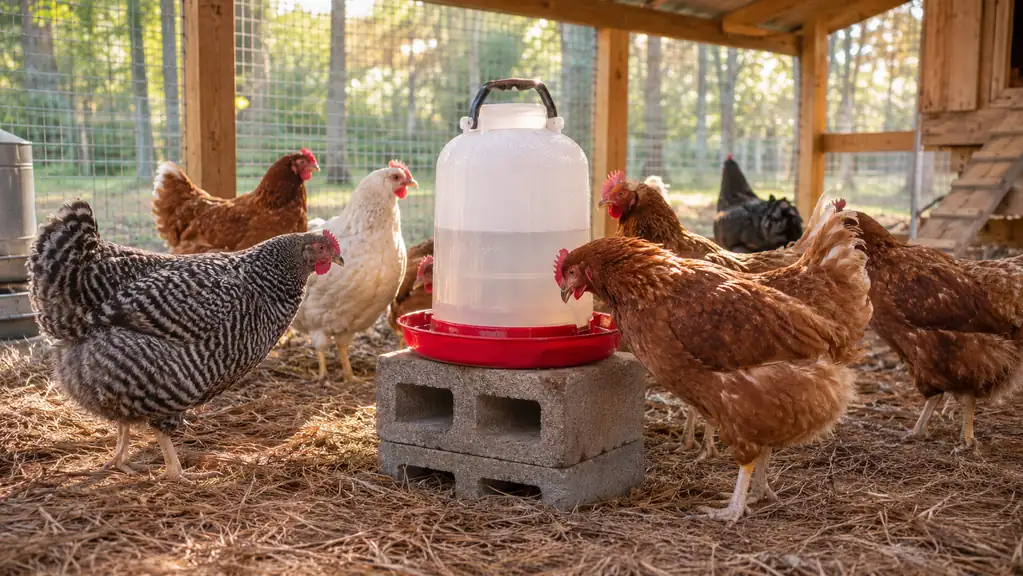
I keep 14 laying hens in a walk-in wooden coop with a covered run, and that drinker is now the only water source they have. It sits on two stacked cinder blocks so the drinking lip clears the litter. I fill it from the top with a hose, which is the whole reason I bought this one and not another flip-over waterer. It has held up through two winters and one hard freeze, and I have opinions about all of it. Here are ten reasons it beats the bucket I used to lug.
The waterer I should have bought in 2019 instead of hauling buckets
6.25 gallons, gravity-fed, filled from the top with a hose. That is the whole pitch, and it is enough.
Amazon Check Today's Price on Amazon →Hens cannot stand in the water
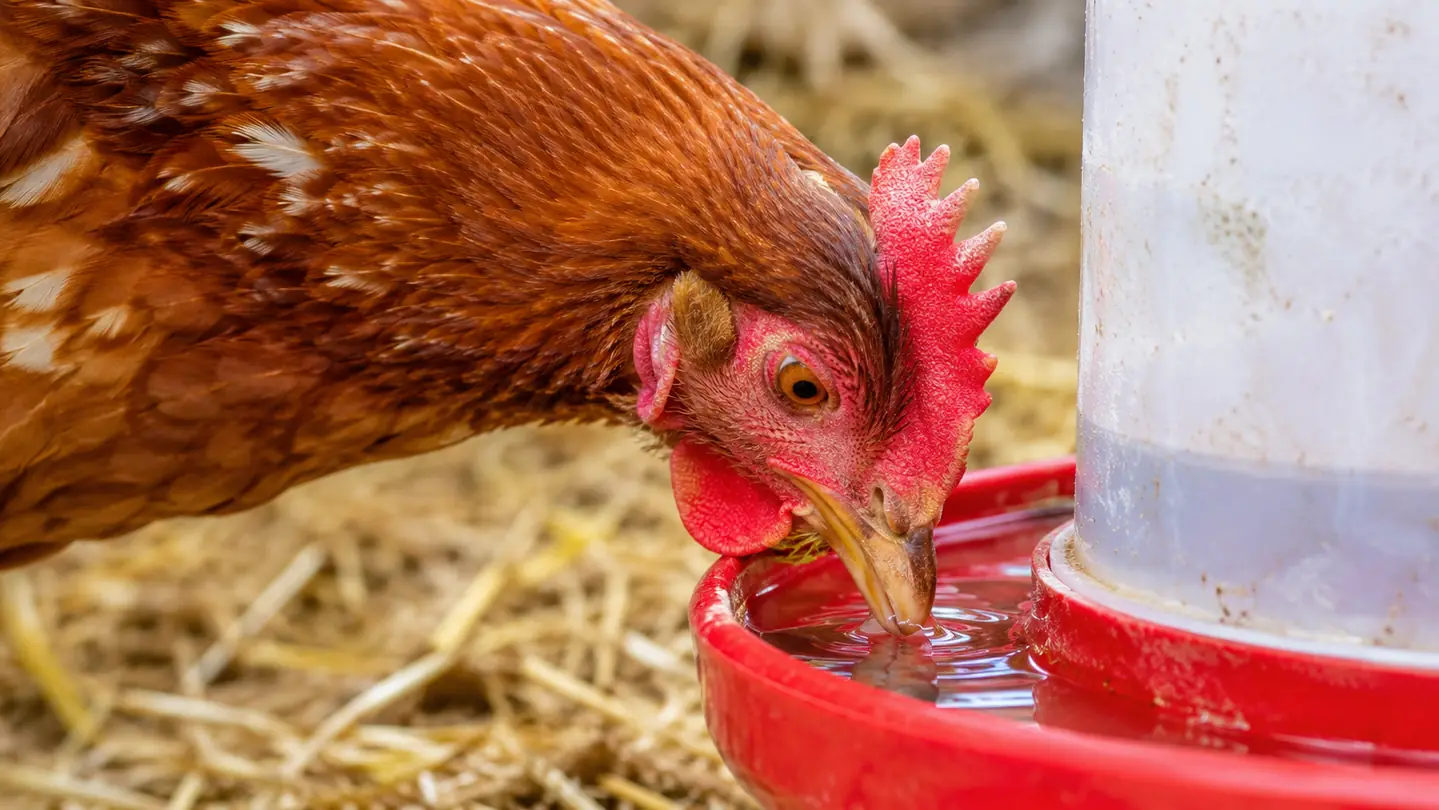
An open bucket is an invitation. A hen puts a foot on the rim to steady herself, loses her balance, and now the water is brown and something is floating in it. On a drinker the water sits in a closed reservoir and only fills a shallow lip the birds drink from. Their feet do not fit in that lip. That single difference is most of the argument, honestly. Clean water at the lip, dirty feet on the ground where they belong.
The litter stays out of it
Setting mine on two stacked cinder blocks was the best five minutes of work I put into the coop that spring. At that height the drinking lip sits above the pine shavings instead of level with them. Shavings do not get kicked in, and the hens scratch around the base instead of into the water. Before, I was straining pine flakes out of a bucket twice a day with my fingers. I have not done that once since March.
Filling it takes a hose, not a haul
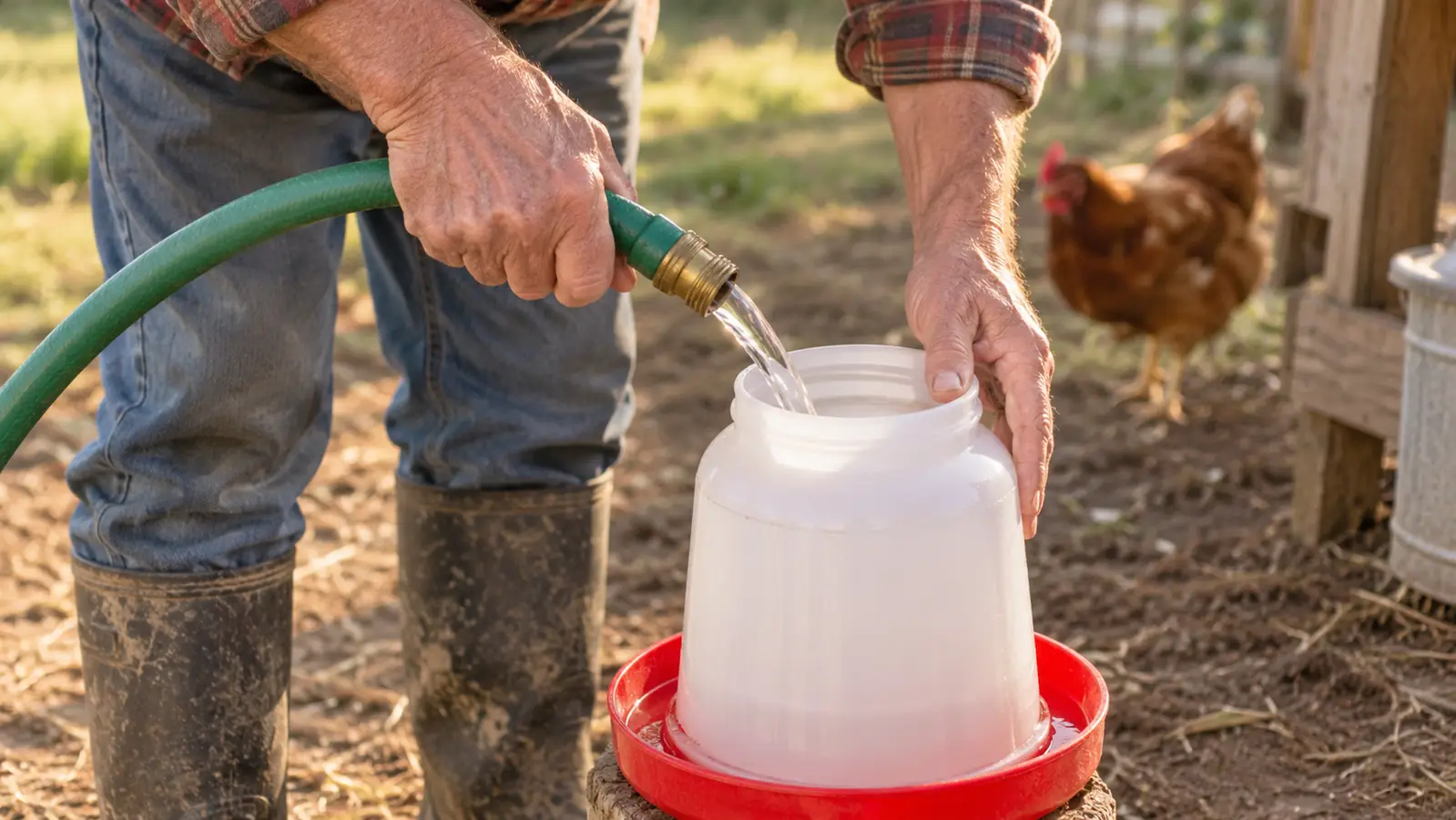
The top-fill lid is the feature I would pay for and then some. I open the lid, put the hose in, and walk away to fill the feeder. No flipping the whole thing upside down, no glugging, no wrestling a full waterer onto a base while water sloshes down my leg. My old waterers were all the flip kind and every one of them made me mad at least once a week. This one does not.
6.25 gallons is four days in July
Fourteen hens, a 6.25 gallon reservoir, and I refill roughly every four days in the heat of summer and about once a week when it cools off. That math is the reason the Harris Farms drinker stays full while I am at the grocery store or down at the goat shed trimming hooves. If I have a sick morning or the truck will not start, the hens still have water. A bucket does not give you that slack.
The float valve keeps the lip at a steady level
Gravity does the work and the float valve inside regulates the flow so the drinking lip stays at a consistent depth instead of draining to nothing and then flooding. That steadiness matters more than it sounds. Hens like water they can reach without stretching, and I like not finding the lip bone dry at four in the afternoon because one bird decided to splash.
It is one piece to scrub, not five
Every couple of weeks I pull the Harris Farms drinker off the blocks, dump it, scrub the inside with a brush, rinse it with a splash of vinegar and water, and set it back. It is under ten minutes, one piece, no gaskets to lose and no base to hunt down in the run. The plastic is BPA free, which matters to me when it is the thing my eggs come from. Small waterers with a dozen parts were never this easy to actually clean.
No flipping, so nothing cracks
I went through several of the small flip-over plastic waterers before this one. They crack at the neck, or the base gets stepped on, or the handle pulls out of the top. All of that came from handling them twice a day. The Easy-Fill stays put on its blocks and I fill it where it stands, so there is no lifting, no turning over, no stress on the plastic. It weighs four pounds empty. Nothing about using it beats the thing up.
It runs on gravity, not a cord
There is nothing to plug in and nothing to replace. Water moves by gravity and stops at the float. That is the entire mechanism, and it is why the thing keeps working when the power is out or when I forget about it for a week. I will be honest about winter, though. In January 2025 mine froze solid during a cold snap, and now I keep a heated base under it in freezing weather. That base is a separate thing and it is not optional here.
Fewer trips means I notice problems sooner
This is the one nobody tells you. When you are out there twice a day dumping and refilling, you stop looking. It becomes a chore you finish fast. Now that I am only out there every few days for water, I actually look at the water, and I look at the hens drinking it. A bird that hangs back from the lip gets noticed. Cloudy water gets noticed. That has been worth more to me than the time saved, and I am not a veterinarian, so noticing early and calling mine is about all I can do.
Amazon See the drinker that got me out of the twice-a-day habit →
The whole flock drinks at once without a fight
Fourteen hens around one bucket is a pecking order problem. The top birds stand in it and the bottom birds wait. The lip on the Harris Farms drinker is wide enough that several birds can get their heads down at the same time, and nobody has to stand in anything to reach it. I still get the occasional shove. I do not get a hen going thirsty because she is low in the order.
What I'd Skip
I would skip the open bucket entirely, and I would skip the small flip-over waterers too, because I spent money on several of those before I learned. What I would not skip is thinking about placement and weather. Mine sits on cinder blocks in the covered run for a reason, and if I had left it on the ground I would have written a very different piece. I also would not pretend the freeze does not happen. Any open-water setup in January is going to need help, and mine gets a heated base under it until the cold breaks. And one more thing, since I am being plain about it: a drinker keeps water clean, but clean water is not the same as health care. If a hen looks off, droopy, or stops drinking, that is a call to the vet, not a look at the waterer. That is the honest version.
Fourteen hens, 6.25 gallons, four days in July. That arithmetic is the whole reason I stopped hauling buckets.
Stop hauling water twice a day. Fill it from the top and walk away.
What I use for 14 hens in a covered run: the Harris Farms Easy-Fill Poultry Drinker, filled with a hose about every four days in summer.
Amazon Check Today's Price on Amazon →