
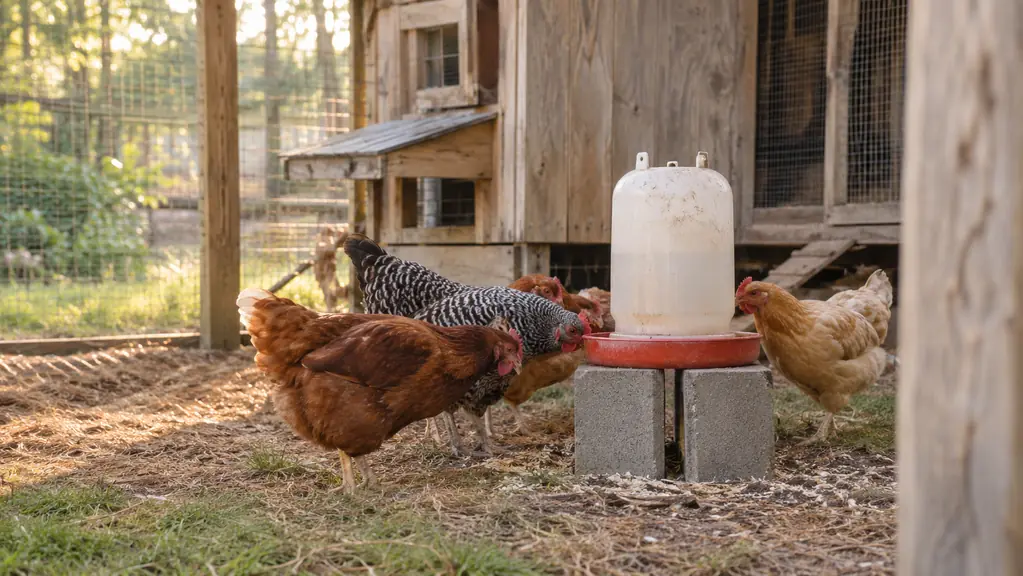
For two summers I carried water to fourteen hens twice a day. Not because I wanted to. Because the waterers I started with held about a gallon each, and a gallon in July lasts a laying flock until roughly lunch. I would top them off before the heat came, come home to warm water with a green film in the bottom, dump them, rinse them, fill them again. Twice a day, June through September.
I tried the usual fixes first. Set them in the shade. Moved them away from the feeder so the hens would quit kicking shavings into the trough. Bought a second set so I could swap clean for dirty and deal with the mess later, which only doubled the number of things I had to wash. Ron told me I was making a hobby out of a chore. He was right.
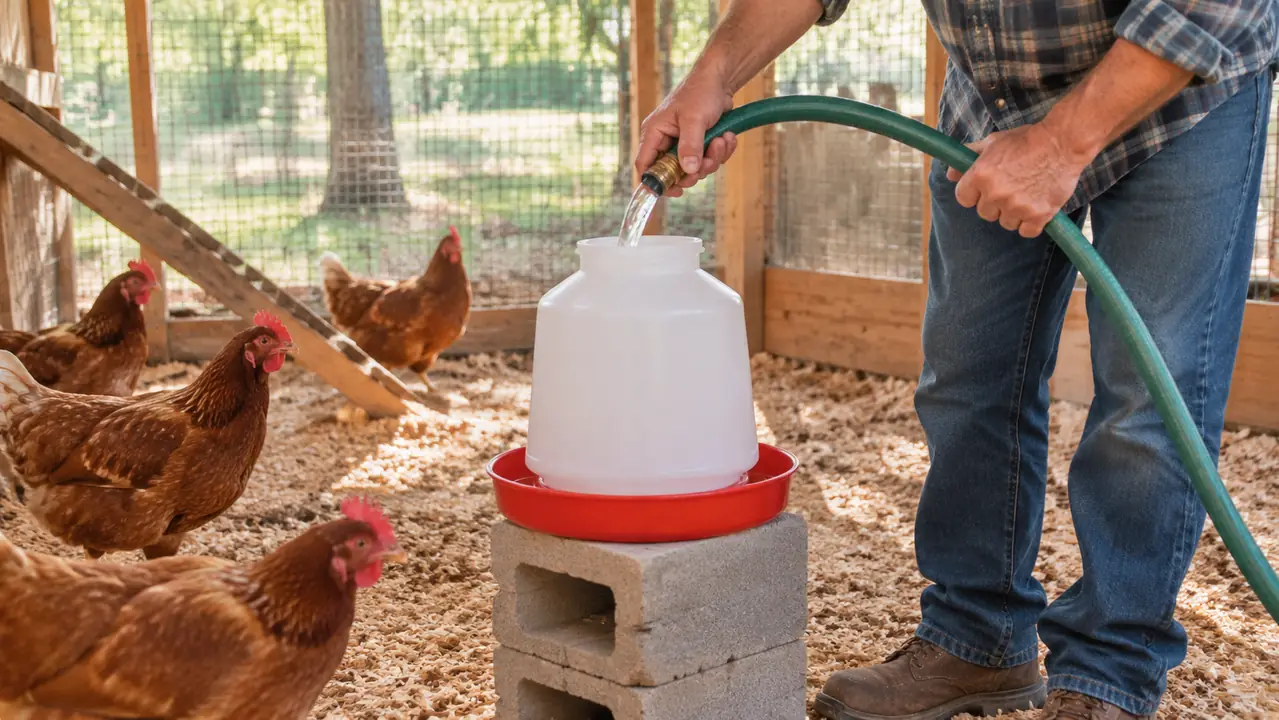
In March 2024 I bought the Harris Farms Easy-Fill Poultry Drinker, the 6.25 gallon size. It is gravity-fed, it has a float valve that holds the water level steady, and the lid comes off the top so you fill it with a hose instead of flipping a full waterer over your boots. That last part is the whole reason I bought it. There is no flipping. You take the lid off, you put the hose in, you walk away.
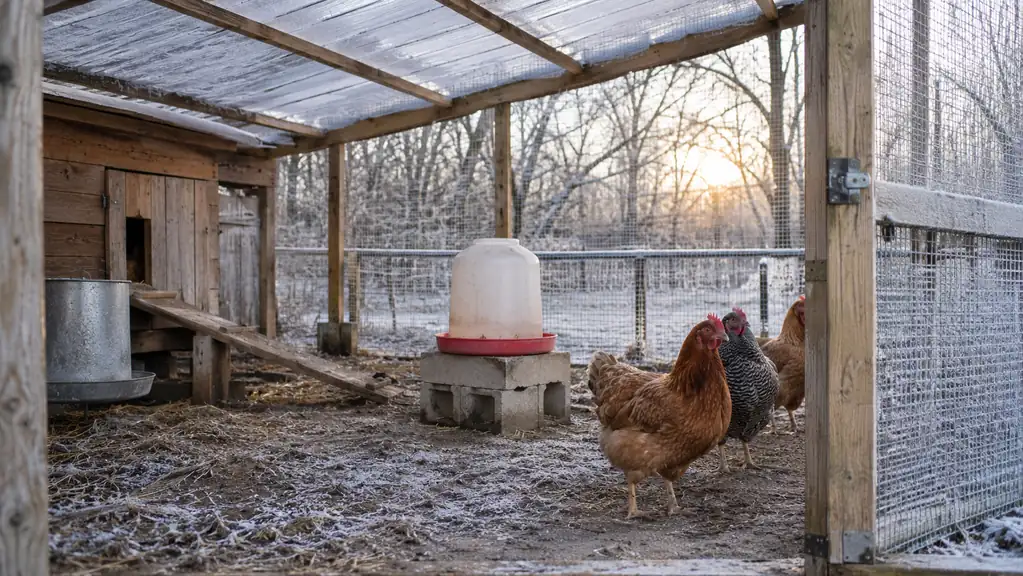
The drinker sits on two stacked cinder blocks in the covered run, tall enough that litter stays out of the trough. I fill it about every four days in summer, about once a week when it cools off. Fourteen hens on one waterer. I have not carried a bucket since the week I set it up.
Fourteen hens, one waterer, about ten minutes of my attention every four days. That is the entire change.
Stop hauling water twice a day
The Harris Farms Easy-Fill Poultry Drinker holds 6.25 gallons, fills from the top, and uses a gravity-fed float valve to keep the trough at a consistent level for a small to medium flock. It is the one piece of gear in my run I would buy again tomorrow.
Amazon Check Today's Price on Amazon →One thing I did not expect: the float valve does the work I used to do with a bucket. The reservoir keeps the trough at the same depth all day, so the hens always have the same water to drink from. No more shallow pan by mid afternoon, and no more overflow when I filled it in a hurry and got distracted.
It is not maintenance free and I will not tell you it is. Every couple of weeks I lift it off the blocks, which is easy enough since it weighs about four pounds empty, scrub the inside with a brush, and give it a vinegar rinse. In July and August I do that more often, because anything holding standing water in this climate will grow something. The difference is that cleaning it is a ten minute job I put on the calendar, not a nasty surprise at six in the morning.
In January 2025 we had a cold snap that froze it solid. That is not the drinker's fault, that is January in North Carolina. Now I keep a heated base under it through the cold months, and I check the trough with the back of my hand every morning before I open the pop door. If your winters run colder than mine, plan for that from the start.
The hens adjusted in about a day. What I noticed over the following weeks was smaller than that. The water stays cleaner because the reservoir is up off the ground and closed, so shavings and droppings are not landing in it all day. On the hottest afternoons last August the trough still had cool water in it at suppertime. A hen that will not leave the shade to walk to a warm waterer is a hen that is not drinking enough, and I had a few of those.
Filling it is the part that sold me. The hose reaches from the spigot at the corner of the coop to those blocks, I pop the lid, and I let it run while I fill the feeder and check the goats. By the time I am done in the goat shed, the drinker is full and I have not carried anything heavier than a feed scoop.
What I would skip, if I could go back, is the collection of small waterers in my shed. I bought three over four years trying to solve a problem that one 6.25 gallon drinker solved. If you keep more than a handful of birds and you are still topping off a one gallon jug in July, the math stops working for you sometime in your second summer. It took me two.
And if you keep three hens on a patio, this is more waterer than you need. It suits a flock like mine, somewhere in the ten to twenty bird range, where the daily topping off is the chore that wears you down.
What I'd Tell You If We Were Sitting at My Kitchen Table
If you were on the other side of my kitchen table, here is what I would say. Buy the size that matches your flock, not the size that matches your mood that week, because a waterer you have to fill every single day is a waterer you will start to resent by August. Put it up on blocks so the litter stays out of the trough. Wash it on a schedule instead of waiting until it looks bad to you. Have a plan for the first hard freeze, whether that is a heated base or carrying it inside at night. And if a bird looks droopy, sits fluffed up in the corner, or is not drinking, that is a call to the vet, not a conversation about equipment. I am not a veterinarian and I will not pretend to be one. I am a woman with fourteen hens who got tired of hauling buckets.
The one piece of gear I'd buy again tomorrow
Harris Farms Easy-Fill Poultry Drinker, 6.25 gallons, gravity-fed float valve, top-fill lid. Bought in March 2024 and still the only waterer in my run.
Amazon Check Today's Price on Amazon →