
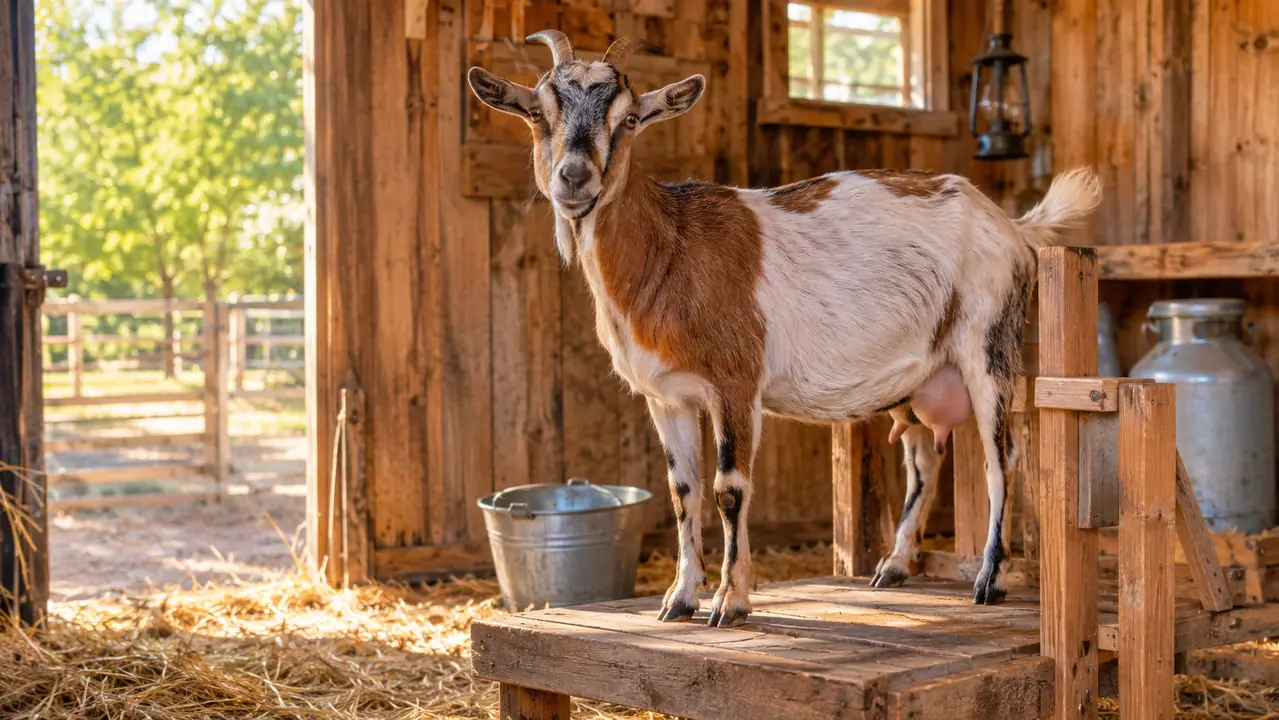
A goat's hoof does not stop growing because the calendar says you are busy. I learned that the summer I let Pepper go nine weeks between trims and watched her start walking on the sides of her feet. I keep three Nigerian Dwarf does on four acres outside Siler City, and the same pair of Hongmei Outdoors hoof trimmers has done every trim here since April 2023. Not because I am sentimental about a tool. Because they still cut, and the cheap garden snips I used before them did not.
Those snips crushed the hoof wall instead of slicing it, and a crushed wall splits. I spent a good part of one summer fixing damage I had caused with the wrong tool. So here are ten plain reasons a pair of real hoof trimmers earns a spot on the barn shelf, in the order I would argue them to a neighbor leaning on the fence.
The pair that has done every trim on my three does since April 2023
Carbon steel bypass blades, 8 inches long, round point, spring loaded, with a spare spring and a switch lock in the box.
Amazon Check Today's Price on Amazon →Hooves grow on their own schedule, not yours
A goat's hoof keeps growing whether or not the fence needed mending that week. Hazel, Pepper and Clover get trimmed about every six to eight weeks, and by week eight I can see the wall starting to fold under. On soft wet ground it goes faster. If the tool lives on a shelf three steps from the milk stand, the trim happens on time. When I had to dig snips out of the garden bucket, the job slid to nine weeks and Pepper paid for it. Keeping hoof trimmers where the goats are is half of why the trimming gets done.
Bypass blades slice the hoof wall instead of crushing it
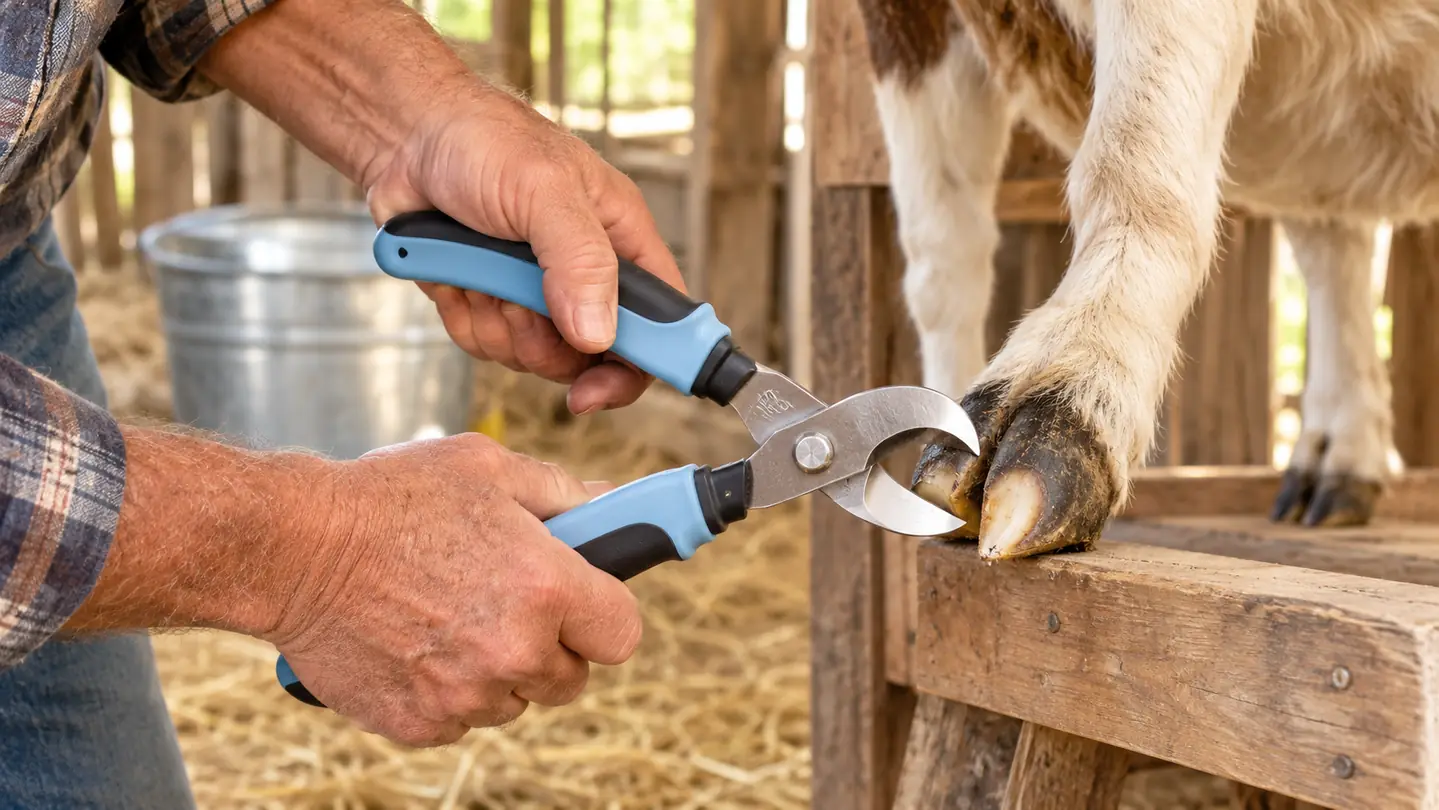
This is the whole argument. Bypass blades pass by each other and cut, the way good pruners do. My old garden snips were anvil style and they pinched the hoof wall between two flat faces. A pinched wall crumbles at the edge, and then you spend weeks chasing splits. The Hongmei Outdoors trimmers have a bypass blade with a serrated, straight edge and a 2.2 inch blade length. That is enough to take a thin slice off a Nigerian Dwarf hoof in one clean pass instead of sawing at it.
A round point is forgiving when the goat shifts her weight
The point style on mine is round, and that matters more than the listing photos suggest. I nicked Pepper too deep in 2023, early on, back when I was still learning how thin a slice should be. It bled a little and stopped with pressure and blood stop powder, but I felt sick about it all afternoon. A rounded point gives you some room when a doe moves. The cutting width is about a centimeter, so the tool takes a modest bite out of the wall rather than a big one.
Eight inches is the right length for a milk stand job
The trimmers measure 8 inches long overall and about 2 inches wide, and that is the size that lets me work with one hand while the other holds a leg. Longer handles look impressive and go clumsy on a milk stand. Shorter ones put your knuckles against the hoof. Mine are the 8 inch size, pack of 1, product style classic. Nothing to charge, nothing to adjust, nothing to remember. You pick them up, you open the lock, you cut.
The spring does the hard part, and a spare comes with it
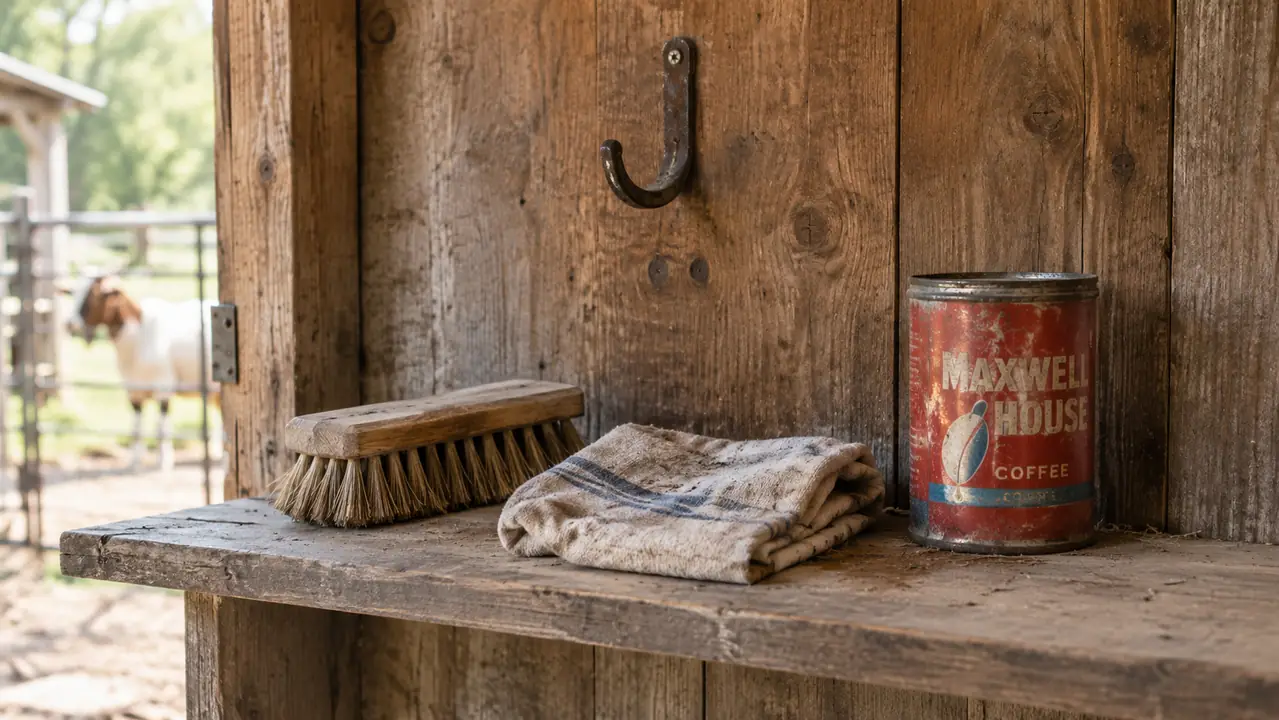
The spring is stronger than the one on my old snips, loaded so the jaws open back up on their own between cuts. Make forty slices in a morning and you will care about that in your hand. The Hongmei Outdoors trimmers come with a spare spring, which I have needed once. The honest downside is that the spring is small and easy to lose if you take the tool apart on the barn floor. Mine lives in a coffee can on the shelf, and the lock stays closed on the trimmers.
A switch lock keeps the blades shut on the shelf
These have an upgrade switch lock, which sounds small until you have reached into a bucket and come out with a cut finger. The lock holds the blades closed when the trimmers are hanging or rattling around in a tote. It also makes them safer to hand to Ron when I need a second pair of hands on a head. Open the lock, do the trim, close it, hang them up. That is the whole routine, and it takes about a second.
A wrist strap means you drop them less often
There is a wrist strap on the handle, the stop falling kind. I loop it on when I am working alone with a doe who would rather be somewhere else. Trimmers dropped in shavings come up with grit in the pivot, and grit is what wears a cutting edge down over time. Mine get rinsed and dried after every trim and hung up by the strap. They have been going since April 2023 and still take a clean slice on all three does.
Ambidextrous handles let two people take turns
Hand orientation on mine is ambidextrous, and the handle is curved with a rubber grip. Ron holds a head or a hind leg depending on which doe is being difficult, and we have passed the trimmers back and forth without either of us fumbling. The curve sits in the palm and the grip does not turn slick when your hands are wet from the water bucket. If you have a helper who only shows up for goat chores, a tool that works from either side gets more done in one session.
Carbon steel and rubber grips hold up to barn life
The blade material is carbon steel and the handle is thermoplastic rubber. Carbon steel holds an edge well, but it will rust if you put it away wet. That is the tradeoff, and I would rather have the edge. My routine is rinse, dry with the rag that hangs by the milk stand, close the lock, hang. Twenty seconds. Do that and the Hongmei Outdoors blades stay clean and free of spots. Skip it and you will see them by the end of the month. Item weight is 0.15 kg, light enough that my hand does not ache after three does.
They are not only for goats
The listing calls these multi purpose, and it is accurate. It names goats, sheep, lamb, alpaca and pig hooves, and it also lists garden jobs such as floral pruning and small branches. I use mine on the does, on twine around a hay bale, and on a stray shoot coming off the browse bushes in the paddock. If you keep sheep or alpaca alongside a few goats, one pair covers both. One hook on the shed wall, one tool, less to keep track of when the day gets away from you.
What I'd Skip
I would skip anything with an anvil blade for hooves, and I would skip cheap garden snips, because I tried that route and paid for it in crushed hoof wall. I would also skip the big heavy shears sold for full size dairy goats if you keep Nigerian Dwarfs, since an 8 inch trimmer is already more tool than a dwarf hoof calls for. And I would skip leaving them out wet or letting the spare spring roll loose in a drawer. One more thing, and I mean it: if a hoof looks infected, smells wrong, or a doe is favoring a leg beyond what a normal trim would explain, that is a vet call, not a trimming problem. I am not a vet and I do not play one in the barn.
Eight inches, bypass blade, round point, and the same pair has trimmed three does every six to eight weeks since April 2023.
One tool, three does, every six to eight weeks
Carbon steel bypass blades with a round point, 8 inches long, spring loaded with a spare spring, a switch lock and a wrist strap. Mine have lived on the shed shelf since April 2023.
Amazon Check Today's Price on Amazon →