
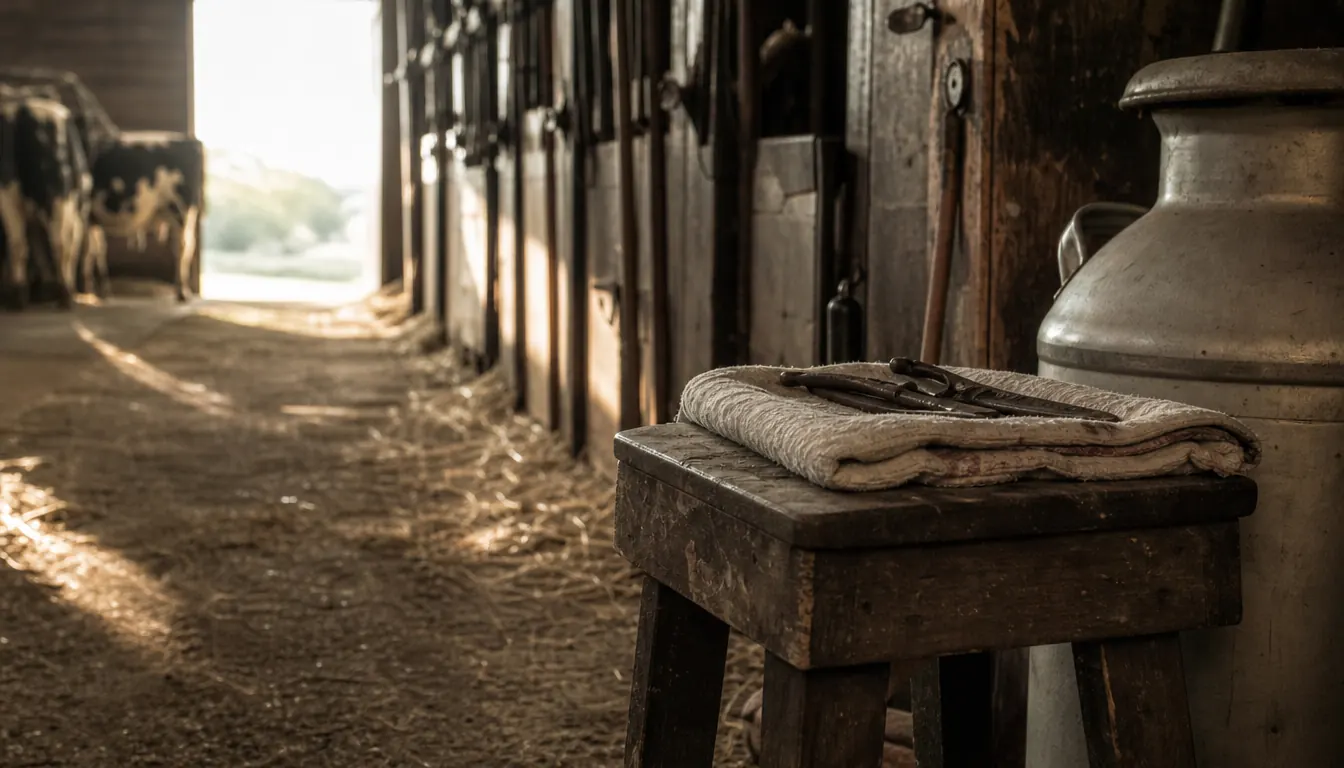
I keep three Nigerian Dwarf does on four acres outside Siler City, North Carolina. Hazel is six, Pepper is four, and Clover is three. I trim all three on the milk stand about every six to eight weeks, and Ron holds a head if one of them gets opinionated. I bought the Hongmei Outdoors goat hoof trimmers in April 2023, after a pair of cheap garden snips crushed a hoof instead of cutting it. That is the short version of why these trimmers stay in my barn. The longer version is the comparison I wish I had read before I borrowed a pair of farrier nippers and assumed they would be better because they were bigger.
Here is the short answer. For a small herd of goats and routine upkeep, the Hongmei Outdoors trimmers are the tool I reach for. They are light, they fit one hand, and the bypass blades take a thin slice without tearing the hoof. Farrier nippers are the better tool for thick, hard hoof wall and heavy overgrowth. They give you leverage and a bigger bite. They are not the same job, and one is not a straight upgrade of the other.
| Hongmei Outdoors Trimmers | Farrier Nippers | |
|---|---|---|
| Main job | Routine trims on goat, sheep, lamb, alpaca and pig hooves | Heavy hoof wall on horses and thick overgrown hooves |
| Cutting action | Bypass blades slice like scissors | Compression jaws take a bigger bite with two-handed leverage |
| Control in tight spaces | One hand can open, place and close the jaws | Needs two hands and a brace against your body |
| Precision at the tip | 2.2 inch blade and 1 centimeter cutting width, round point | Longer jaws and a wider bite, less precise at the tip |
| Handle and grip | Curved thermoplastic rubber handles, ambidextrous | Long handles built for a two-handed pull |
| Weight | 0.15 kg | Noticeably heavier |
| Lock and carry | Switch lock and wrist strap | Built to live in a farrier's truck, not a pocket |
| Spring | Spring loaded, spare spring included | Jaws open by hand, no return spring |
| Thick overgrowth | Slow and careful, many passes | Fast first pass with leverage |
| Best hoof type | Small, growing goat hooves that need frequent thin slices | Thick, hard, neglected hooves that need a slab removed |
| Learning curve | Low, but easy to take too much if you rush | Higher, a dull pair can crush instead of cut |
| Best for | Three to six does on a milk stand | A string of horses or a barn full of heavy goats |
How I Ended Up With Both Kinds of Tool
My first mistake was using garden snips. They were sharp, or so I thought, and they had a spring. What they did not have was a blade that met cleanly. On a goat hoof, that matters. A dull or loose tool crushes the wall, and a crushed wall grows out ragged. I would rather take three thin slices with a tool that cuts than one hard squeeze with a tool that mashes.
The Hongmei Outdoors trimmers fixed that for the kind of trimming I do. I use them on Hazel, Pepper and Clover about every six to eight weeks. The company lists them for sheep, lamb, alpaca and pig hooves too, though my experience is with goats. Then I handled a pair of farrier nippers. The first thing you notice is the weight and the length of the handles. The second thing you notice is that you need both hands and a firm brace to make them work. They are built to remove a lot of hoof in a hurry. I borrowed a pair from a neighbor who shoes his own horses and brought them home in February 2024. I tried them on Clover, who was small then. I got the jaws around the wall, braced the handles against my hip, and pulled. The hoof gave, but it gave in a chunk instead of a slice, and I spent the next ten minutes with a rasp cleaning up what I had done. That was the day I stopped assuming bigger meant better.
What the Hongmei Outdoors Trimmers Are Built Like
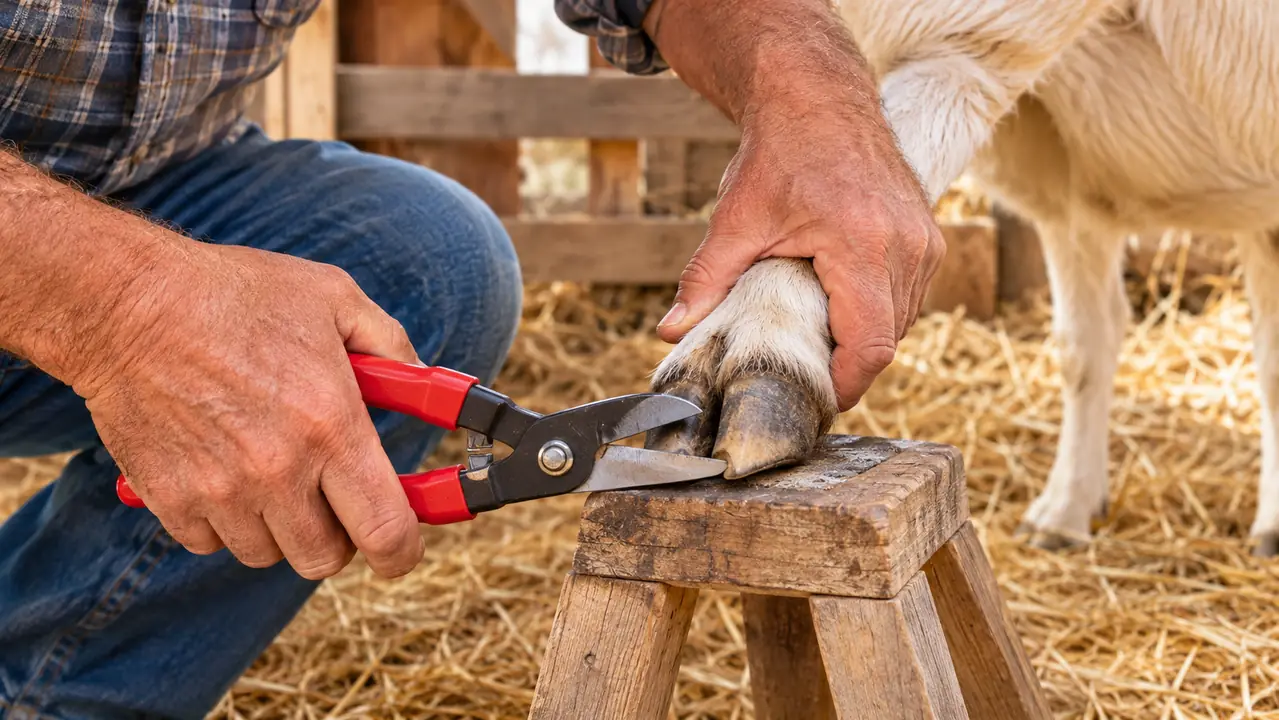
The trimmers are 8 inches long and weigh 0.15 kg. The blade is 2.2 inches, with a 1 centimeter cutting width. The blade is carbon steel, and the edge is listed as serrated and straight. The point is round. Those numbers sound small, but that is the point. A goat hoof is not a horse hoof. You want a tool that fits the hoof, not a tool that overpowers it. The first trim with them was on Hazel in April 2023. I had been dreading it after the way the snips went. I made four thin passes on her front left hoof and stopped to look at the sole between each one. It took longer than the snips ever did, and not once did I feel the blade grab or twist.
The handles are thermoplastic rubber, curved, and ambidextrous. That last word matters if Ron and I both grab them. The spring is loaded, and the package includes a spare spring. There is a switch lock and a wrist strap. I keep the lock on when the trimmers are in the bucket, because an open pair of blades in a feed bucket is a good way to cut a finger. The lock is not a substitute for paying attention, but it helps.
The bypass blade is the part I care about most. Bypass means the blade passes the lower jaw like scissors. It slices. Anvil-style tools crush against a flat plate. On a hoof, I want a slice. The round point is also easier to place without stabbing something you did not mean to stab. I still keep a bottle of blood-stop powder within reach. I learned that the hard way on Pepper in 2023. I took too deep a slice, it bled a little, and pressure plus powder stopped it. Since then I take thinner passes. Anything beyond a normal trim is a vet call, not a kitchen-table project.
Where Hongmei Outdoors Wins
The first place the Hongmei Outdoors trimmers win is control. I trim alone most of the time. Ron holds a head if needed, but I am the one with the hoof in my hand. With the trimmers, I can open the jaws with one hand, place the blade where I want it, and close. With farrier nippers, I need two hands and a brace. On a small doe, that is too much tool and not enough feel. The difference is not subtle when the hoof is the size of a large thumbnail and the goat is shifting her weight.
The second place they win is repeated thin slices. Good goat trimming is not about removing the most hoof in one bite. It is about taking small passes and checking the sole. The spring-loaded action and the light weight make that easier. The lock and wrist strap are small things that matter in a barn. I can hang them on a hook, lock them shut, and find them again. I have dropped them on concrete and they have kept working. The spare spring is still in the drawer. I have not needed it, but I like knowing it is there.
The third place is fit. The 8 inch length and 2.2 inch blade are sized for a goat. A farrier nipper is sized for a horse. When I use a tool that is too big, I end up wrestling the tool and the goat. That is how I nicked Pepper. It was not the tool's fault. It was mine, because I was rushing with a tool that did not fit the job. The smaller pair lets me slow down without feeling like I am using a toy. The old snips had play in the pivot, which is what let them twist on me. The Hongmei Outdoors pair does not. I check the joint every time I oil them and it has stayed tight through two full years of trims on three does.
Where Farrier Nippers Wins
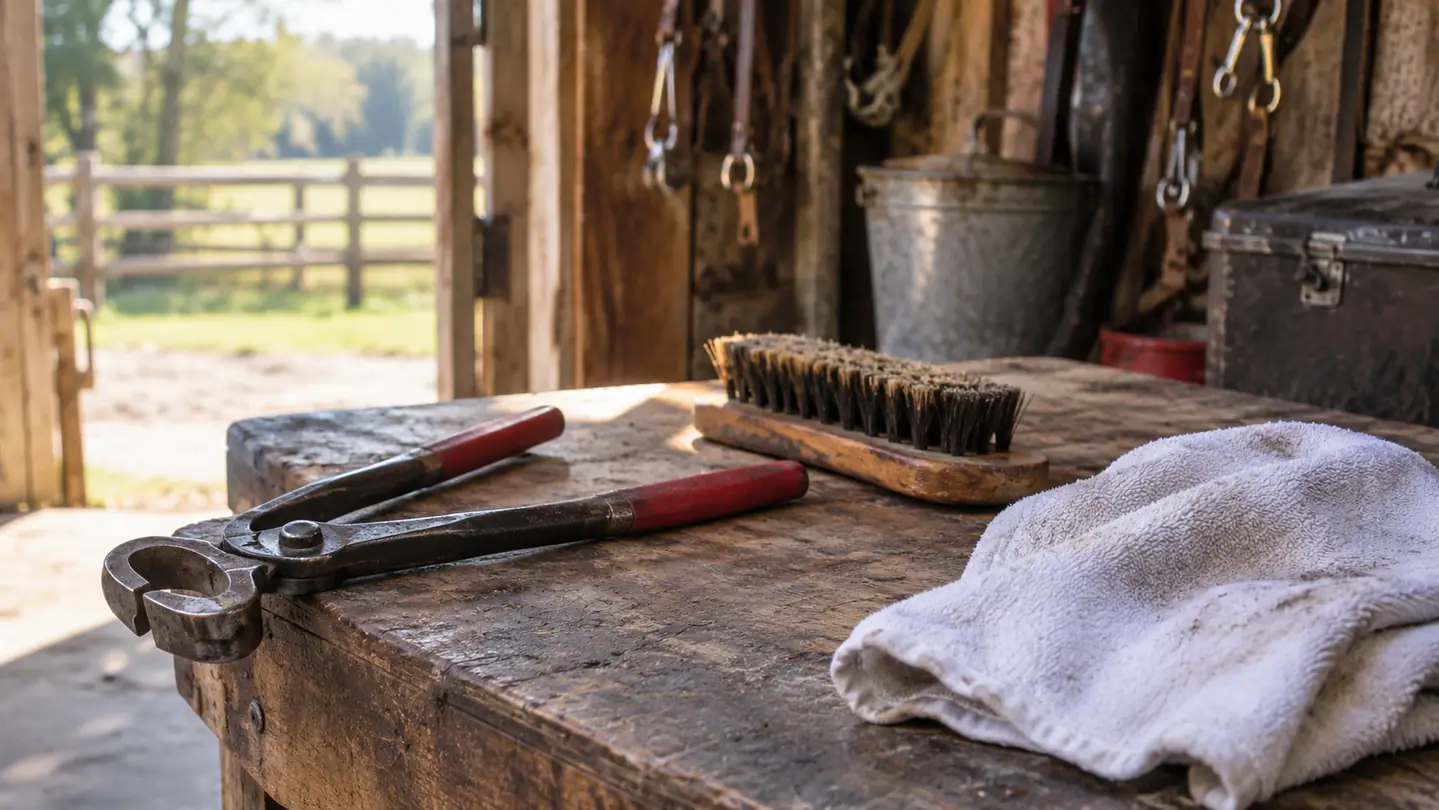
I am not going to pretend farrier nippers are useless on a goat. If a goat has gone a long time without a trim and the hoof wall is thick and hard, nippers will take a slab that the trimmers would nibble at for ten minutes. The long handles give you leverage. The jaws open wide. When you need to bring a hoof back into shape, that is real. Keepers with bigger herds often use nippers on the old does with thick walls, then clean up with a rasp. That is a sensible division of labor.
The second place nippers win is heavy overgrowth. If I let a goat go eight months, which I try not to do, the wall can get ahead of me. Nippers would be the safer tool for that first pass, because they take the bulk down. I would still finish with the trimmers or a rasp. The catch is that nippers can crush if they are dull or if you force them. A horse hoof can take that kind of force better than a goat hoof can. On a small doe, a bad squeeze can leave a ragged wall and a sore foot. So the tool wins on power, not on finesse.
The third place is durability under hard use. A farrier's tool is built to be used all day. The Hongmei Outdoors trimmers are built for the kind of trimming a smallholder does. If I were trimming twenty goats a week, I would want the heavier tool and a sharpening plan. For three does every six to eight weeks, the trimmers are plenty.
What I Check Before a Trim
I set up before I catch a goat. The milk stand gets a clean towel. I put the trimmers, a stiff brush, a rasp, and blood-stop powder within reach. I check that the lock is off and the spring is moving. I check the blade with my thumb, not because I am brave, but because a dull blade is more dangerous than a sharp one. A dull blade makes you push. Pushing makes you slip. The stiff brush is for the sole. I brush the mud and bedding out before I set the blade, because grit between the jaws dulls an edge faster than hoof does. A neighbor who trims his own horses told me that, and it has held up.
I also check the goat. If a doe is limping, if the hoof is hot, if there is a bad smell, or if the sole is soft in a way that does not look like a normal trim, I stop. I am not a veterinarian. I trim healthy hooves. Anything that looks like an infection or an injury gets a call to the vet. That is not a disclaimer. It is what I actually do.
After trimming, I rinse the trimmers and dry them. Carbon steel will rust if you put it away wet. I put a drop of oil on the joint and close the lock. The wrist strap goes back on the hook. The whole routine takes five minutes, and it is the reason the same pair has lasted since April 2023.
If your does are due for a trim this weekend, start with the pair that fits one hand
The Hongmei Outdoors trimmers are the pair I use on Hazel, Pepper and Clover every six to eight weeks. They are 8 inches, 0.15 kg, and built for the thin slices a small goat needs. If you are tired of fighting a tool that is too big for the hoof, this is the place to start.
Amazon See It on Amazon →Who Should Buy Which
Buy the Hongmei Outdoors trimmers if you keep a few goats, sheep, alpacas, lambs or pigs and you trim on a stand. Buy them if you trim alone, if your hands are not huge, or if you want to take thin slices and check your work. Buy them if you have been using garden snips or an old pair of pliers and you are tired of crushed hooves. They are also the pair I would hand to someone who is learning, because the size makes it harder to take too much in one bite.
Buy farrier nippers if you have thick, hard hoof walls to deal with, if a goat has been neglected and the hoof is badly overgrown, or if you trim enough animals that the extra leverage saves your hands. Buy them if you already know how to use them. Do not buy them because they look more serious. A tool that is too big for the hoof is not a better tool. It is just heavier.
If you are between the two, start with the trimmers. You can always add nippers later for the one old doe with the thick wall. I have not needed to. My three are Nigerian Dwarfs, their hooves are small, and the trimmers do the job. If I ever take in a rescue with a hoof like a dinner plate, I will borrow a pair of nippers. Until then, the Hongmei Outdoors trimmers stay on the hook by the milk stand.
The pair that stays on the hook by my milk stand
Hongmei Outdoors goat hoof trimmers, 8 inches, carbon steel bypass blades, 1 centimeter cutting width, with a lock, a wrist strap and a spare spring. For routine trims on a small herd, that is the tool I reach for.
Amazon See It on Amazon →