
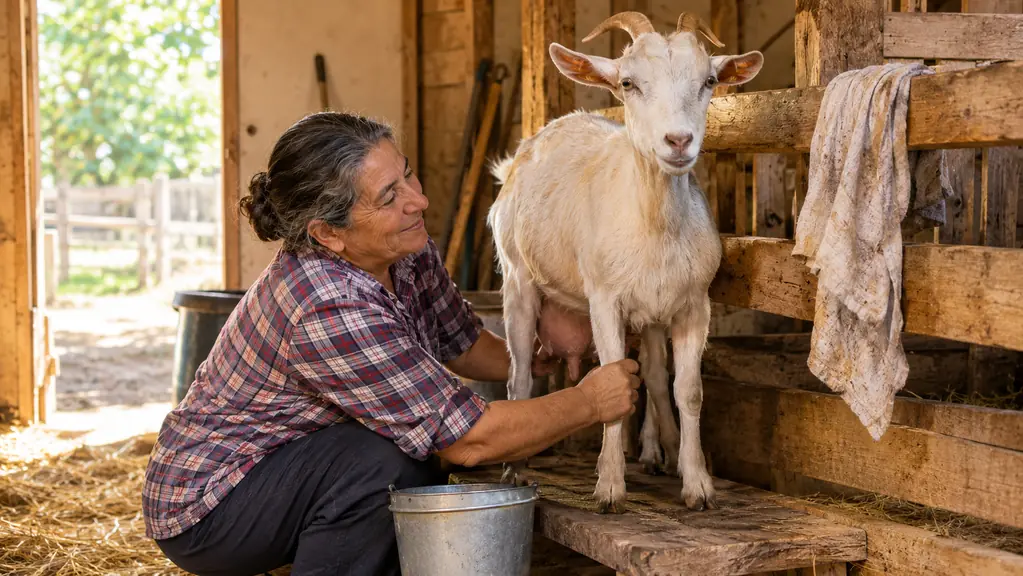
The first time I trimmed a goat's hooves I used a pair of garden snips from the shed. They did not cut. They crushed. The hoof wall folded over like a fingernail bent sideways, and I stood there feeling like a fool while a small doe shifted her weight and waited for me to get on with it. That was 2021, my first year with goats, and it set a pattern. I kept buying tools that were almost right.
The pair that finally stayed in the barn is the Hongmei Outdoors hoof trimmer, an 8-inch carbon steel bypass shear. It arrived in April 2023. I have used it on Hazel, Pepper and Clover every six to eight weeks since, on a wooden milk stand under the shed light, with my husband Ron holding a head when one of the does decides the whole business is a personal insult. I am not a veterinarian and I do not play one in the shed. Anything past a routine trim is a call to mine.
The Quick Verdict
Cuts clean instead of crushing, holds an edge through two years of regular trims, and the lock stays where you put it. The narrow cutting width makes for slow, careful slices, which is exactly what I want now.
Amazon Check Today's Price →The pair that ended up staying in my barn
8-inch carbon steel bypass blades, spring loaded, with a switch lock that holds them shut between trims. Three does and two years on the same pair of blades.
Amazon Check Today's Price on Amazon →How I've Used It
Three does trimmed every six to eight weeks works out to somewhere between eighteen and twenty-four trims a year on this place, plus an extra pass in the wet months when the hooves soften and grow faster than you expect. Hazel is six and has the hardest hooves of the three. Pepper is four and has the softest. Clover is three and would rather be anywhere else on the property. The same trimmer has handled all three temperaments and all three hoof types without me changing how I hold it.
The routine is identical every time. I lead one doe onto the stand, tie her, and start with the front hooves because they are easier and it settles her. I take the wall down in thin slices and keep the round point of the blade turned away from the sole. I check the sole with my thumb before I take another slice. Then the hinds, which is where Ron earns his keep.
Last July I trimmed all three on a Tuesday evening after milking, because I had put it off a week and Hazel's front walls had started to flare at the toe. It was 88 degrees in that shed and I wanted to be done. I still finished the set in under half an hour, but I took the fronts in four thin slices each instead of two thick ones, and I stopped between hooves to wipe my hands on my jeans. Hurrying is what gets a goat nicked. Slicing thin is what keeps a hurry from costing you.
I trim after milking, not before. A doe with a full udder on a stand is a doe who wants down, and a doe who wants down is a doe who moves while the blade is open. That part is not about the tool. That part is about me being 57 and not as quick as I was at 40.
What the Build Tells You
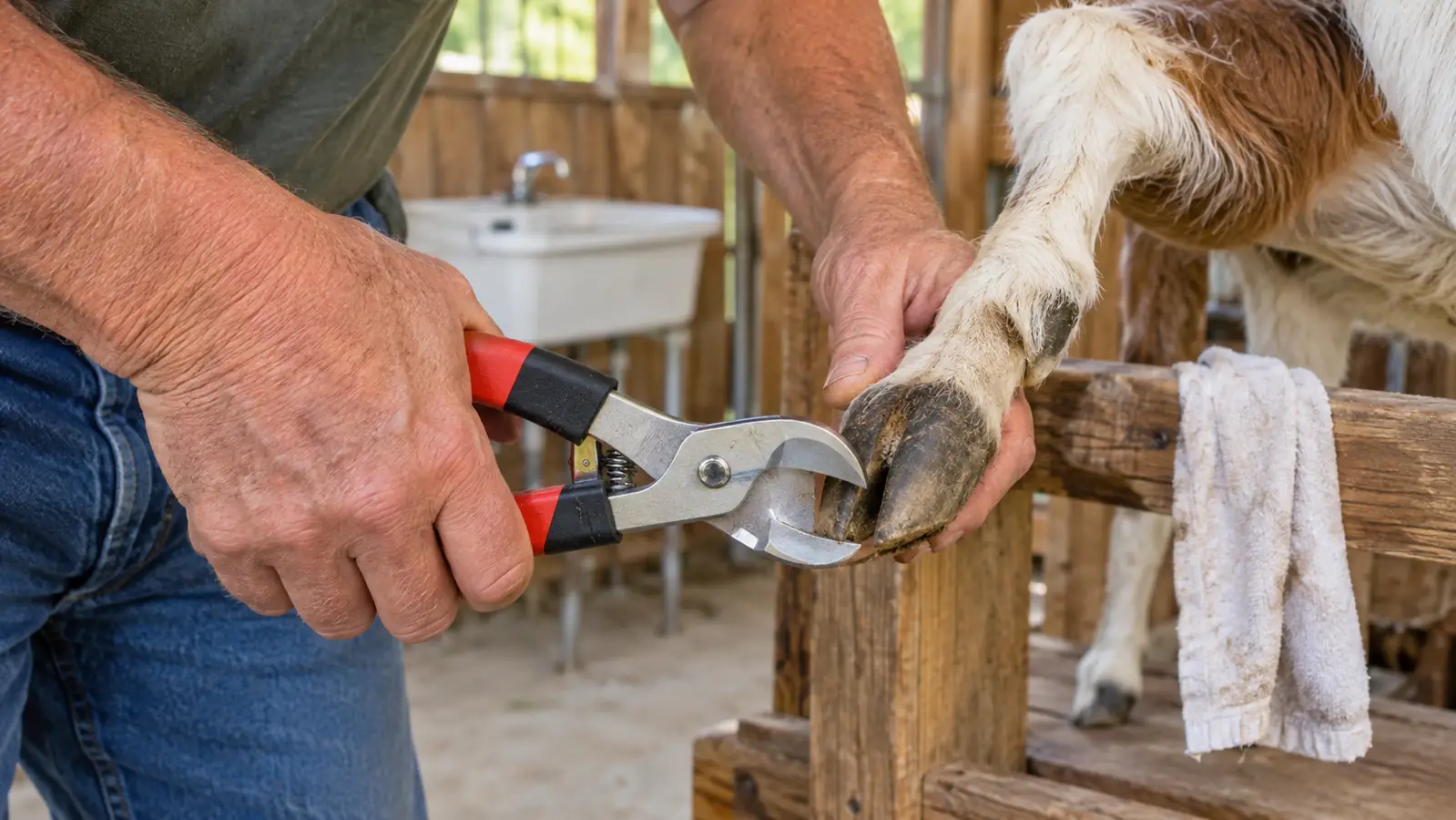
The trimmer is 8 inches long and 2 inches wide, with a 2.2 inch blade and a cutting width of 1 centimeter. The blade is carbon steel, bypass style, with a serrated and straight edge and a round point. The handles are curved thermoplastic rubber over an ambidextrous frame, so it does not matter which hand you favor. It is spring loaded, it comes with a spare spring, and there is a switch lock and a wrist strap.
The bypass part matters more than anything else on that list. A bypass blade cuts like scissors, with one edge passing the other. The old snips I had were closer to an anvil cut, which pinches through whatever is between the jaws. On a hoof, pinching means the wall cracks and splits ahead of the cut, and the goat feels all of it. A bypass cut leaves an edge you can look at and know is flat.
I measured these against the snips they replaced, mostly out of spite. Those were about five and a half inches overall with a jaw that opened wider than the hoof. Wider sounds better. It is not. A wide jaw on a small hoof means the blade sits at an angle to the wall you are trying to cut, and you end up levering instead of slicing. The 2.2 inch blade sits inside the width of a Nigerian Dwarf hoof, so the cut runs straight across instead of wandering.
Eight inches turns out to be the right length for this job. A longer handle gives you leverage but it also puts the blade further from your eye, and I cannot read a hoof line from a foot away. A shorter tool puts my knuckles in the way of the leg. At 8 inches I can watch the cut and keep my hand clear, which on a moving doe is the whole trick.
The curved handles and the rubber grip are the reason I can trim in January with gloves on. My hands are not what they were when I was lifting trays of rolls all day in a school kitchen. The curve keeps my wrist straight and the spring does the opening, so I am only doing half the work with my own grip. The switch lock is small and it took me a month to trust it. Now I trust it more than I trust most things in that shed. It clicks over, the blades stay shut on the nail, and it does not drift open when I set the tool down to grab a rag.
Where They Earn Their Keep
The first thing I noticed was less flinching. Not because the does got better behaved, but because a clean slice through hoof wall is like trimming a fingernail and a crushed slice is not. Pepper used to pull her leg back on the third hoof every single time. Now she mostly lets me finish, and I count that as an improvement in both of us.
The second thing was time. Trimming three does used to eat most of a Saturday morning, partly because I was fighting the tool and partly because I was stopping to apologize to everybody involved. Now it runs about twenty-five minutes for all three, start to finish, including leading them in and out of the shed. That is the difference between a chore I dread and a chore I do on schedule, and on a goat, schedule is most of the battle.
The third thing is that I can run it one-handed. The spring opens the blade for me, so my left hand stays on the leg and my right hand does the cutting. On a small doe that matters more than it sounds like it should, because a goat leg is not a stationary object and a goat who has decided she is finished is not open to negotiation.
The cold-weather trim is the one that tells you what a tool is worth. Stiff gloves, a doe who wants back in the shed, and daylight quitting before five. That is the trim where a heavy spring or a grip that fights you turns a half-hour job into an hour of misery. The last two winters have been the simplest trims of my year, which is not something I expected to say about a milk stand in cold weather.
The listing also says sheep, lambs, alpaca and pigs. I have only put these on goats, so I will only vouch for goats. A neighbor who keeps a few sheep asked about them and I told her the same thing. What I can say is that the blade has handled three years of goat hoof without a chip in it.
Where They Fall Short
The 1 centimeter cutting width is a slow way to take off a lot of hoof. That is fine on a goat trimmed every six to eight weeks. It is not fine on a goat that has gone four months. If I ever bring home an animal with badly overgrown hooves, I am taking small bites for a long while, or I am calling someone with better tools and better hands than mine.
The rubber grip gets slick. Wet hooves, a little milk on my fingers, a humid August morning in North Carolina, and the handle turns in my palm. I keep a rag on the stand rail now and I wipe my hands between animals. Small thing. Real thing.
The switch lock is stiff, and it is stiffer with wet hands. Twice in two years I have pinched the meat of my palm closing it. That is not a defect exactly. It is a lock that holds, and holding has a cost.
Small parts are the other tradeoff. The spring is a spring. If you pull it out to look at it over a concrete floor, you may not find it again. Mine has stayed in. The spare that came in the box is still in the drawer, which after two years I take as a good sign. The wrist strap is thin and I do not trust it to hold the tool, so I loop it and keep a firm grip anyway.
The Nick That Changed How I Trim
In 2023 I went too deep on Pepper's right hind. A little blood, more swearing than I care to admit, and me standing there with my heart going. I put pressure on it and used blood-stop powder, and I called my vet's office that afternoon to make sure I had not done real damage. She was fine and it healed clean. I did not sleep well that night.
What changed was not the tool. What changed was the slice. I had been taking slices thick enough to feel like progress. Now I take thin ones, check the sole, and take another. It takes longer and nobody bleeds. I also moved the shed light so it hangs over the stand instead of behind me, because half of what I was doing wrong was trimming by shadow.
Here is the part that still bothers me. The sharp tool is partly why it happened. A dull pair never let me get that far in one pass, so a dull pair never let me get that deep. Sharp tools reward attention and punish hurry. I am more careful with the Hongmei Outdoors trimmers than I ever was with anything else in that shed, because they will actually do what I ask them to do.
Keeping Carbon Steel Alive in a Damp Shed
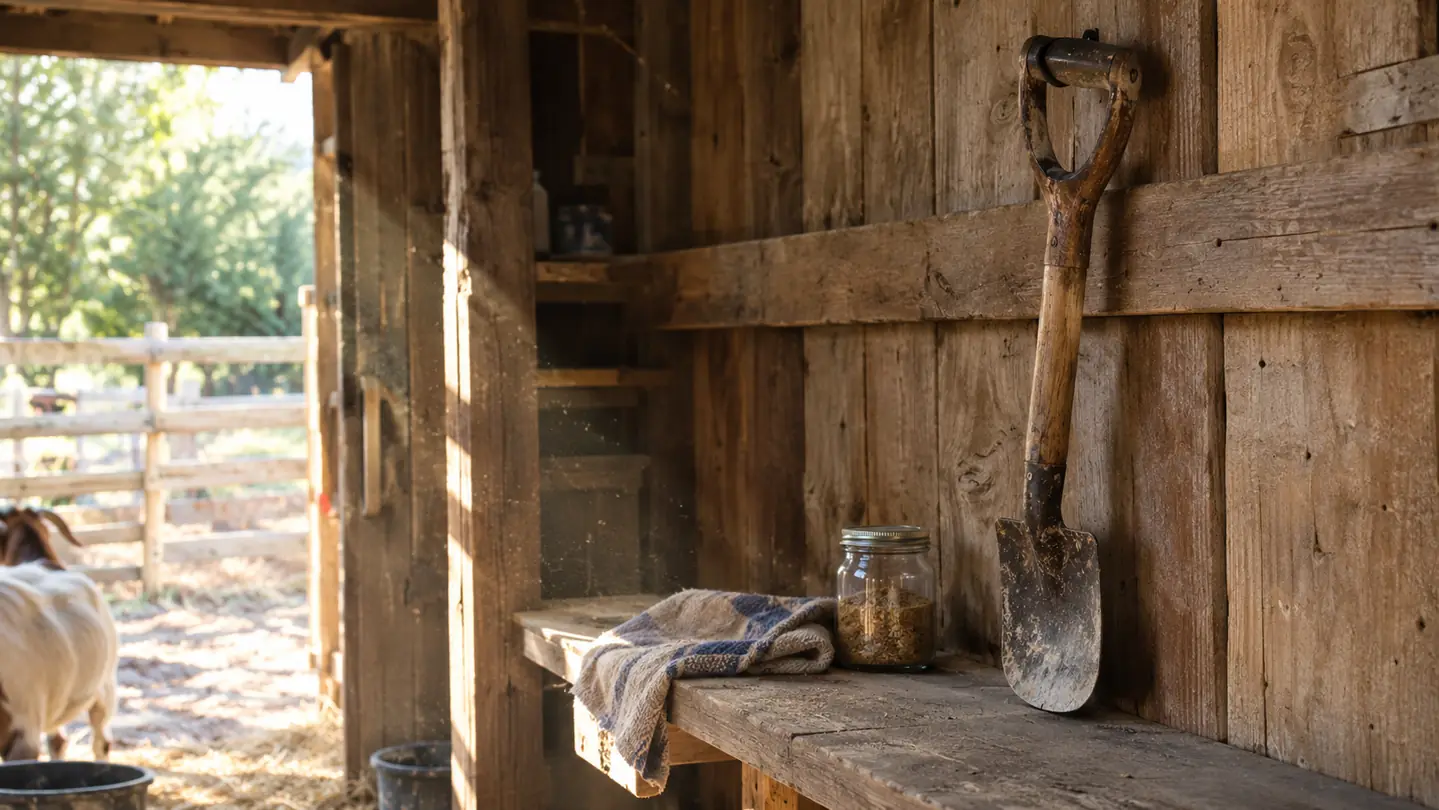
Carbon steel and a goat shed are natural enemies. Every time I finish, I rinse the blades in the utility sink, wipe them dry with the rag that lives on the stand rail, and put a drop of oil on the pivot. Then they go back on the nail, locked closed. What kills a tool out here is not use. It is sitting wet in a bucket with the hose still dripping on it.
August is the real test. We had a stretch last summer with nine days of heavy humidity and the shed walls sweating. I got lazy one evening and left the trimmers on the stand rail instead of the nail, and by morning there was a bloom of rust along the flat of the blade. It came off with a scouring pad and a drop of oil and the edge was fine, but I have not left them out again. The nail is not decoration. The nail is the whole maintenance plan.
Two years in, the Hongmei Outdoors trimmers still cut paper. I have not sharpened them and I have not replaced the spring. I have replaced the rag twice. When the day comes that they start to tear instead of slice, I will sharpen them or I will buy the same pair again, and either way that is a good run for a tool that lives in a shed with three opinionated goats.
What I Liked
- Bypass cut leaves a clean edge instead of a crushed one
- Spring loaded, so it opens one-handed while your other hand holds the leg
- Switch lock holds the blades shut between trims
- Carbon steel held its edge through two years without sharpening
- 8-inch length fits a smaller hand and a crowded shed
- Came with a spare spring and a wrist strap
Where It Falls Short
- 1 centimeter cutting width is slow on badly overgrown hooves
- Rubber grip turns slick when hands are wet
- Switch lock is stiff and can pinch a palm
- Wrist strap is thin and not much use
- The small spring is easy to lose over a concrete floor
Eighteen to twenty-four trims a year, two years running, one pair of blades, and I have not sharpened them once.
Who This Is For
You have two or more goats and you trim them on a schedule. You are doing it yourself because booking a farrier for three Nigerian Dwarfs is hard and harder to justify. You want a cut you can look at and know is flat, and you are willing to take thin slices instead of fast ones. You keep your tools dry and you have a nail to hang them on. If that describes your barn, this is the pair I would hand you.
Who Should Skip It
If you trim one goat once a year and the hooves are usually overgrown by the time you get around to it, this is the wrong tool for that job. You want something that takes more off in a pass, and honestly you want a vet or an experienced trimmer to show you how much to take before you take it. Skip it too if your hands are bad enough that any hand tool is a fight, because the spring helps but it does not do everything. And if you are trying to work through a whole flock of sheep in an afternoon, 1 centimeter at a time will not get you there.
Two years on a nail in my shed, and it is still the pair I reach for
Carbon steel bypass blades, 8 inches long, spring loaded, ambidextrous handles, spare spring in the box. The narrow cut is the point: thin slices, flat sole, no bleeding.
Amazon Check Today's Price on Amazon →