
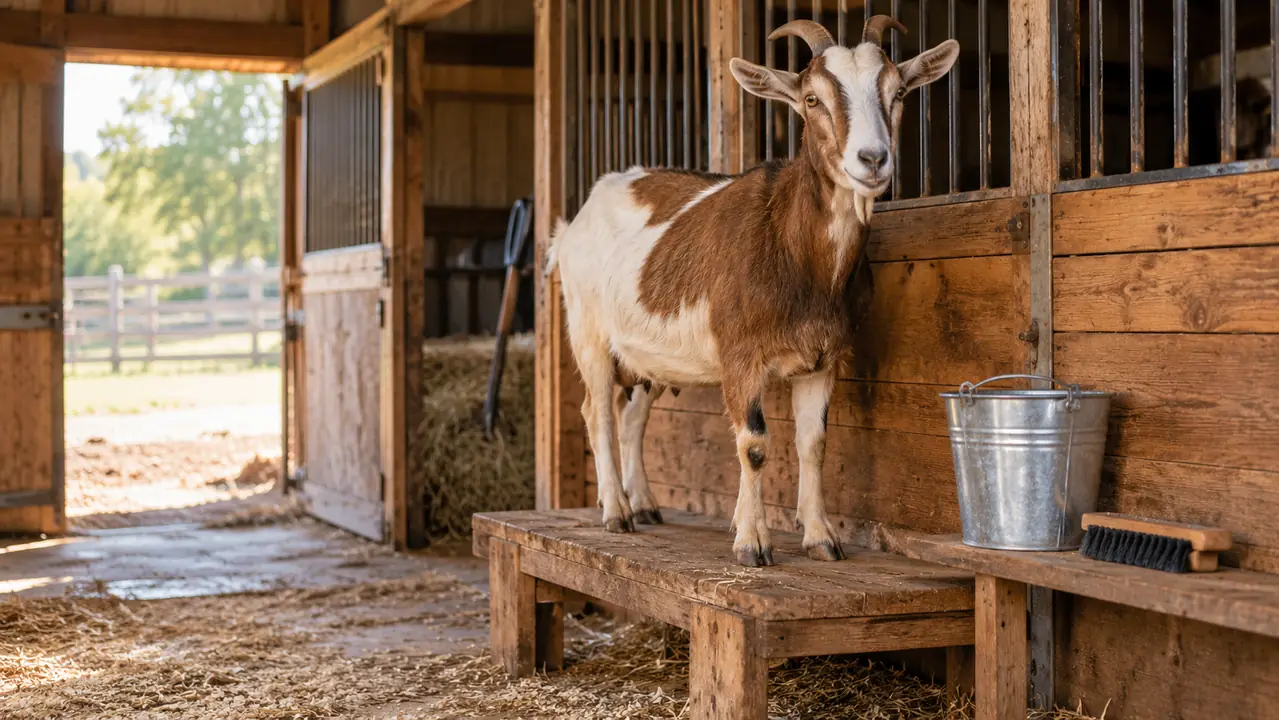
The first spring I kept goats I trimmed hooves with a pair of garden snips I found in the shed. They cut the way a dull kitchen knife cuts a tomato. You press, the thing squashes, and then it gives. Hazel stood on the milk stand and let me do it because she is patient and because she did not know any better. I did not know any better either. What I knew was that trimming day ate an hour and a half, left my right hand aching, and made three does act like I was the worst person on four acres.
In April 2023 I bought a pair of Hongmei Outdoors hoof trimmers. Eight inches long, carbon steel, spring loaded, with a spare spring in the package. What sold me was the blade. It is a bypass blade, which works the way good scissors work, one edge passing the other instead of mashing down on a chopping block. That is the whole story, really. One afternoon the chore turned into about twenty minutes on a Saturday morning, and three does that stopped running when they saw me coming. I wish I had bought them in 2021, when I brought the first doe home.
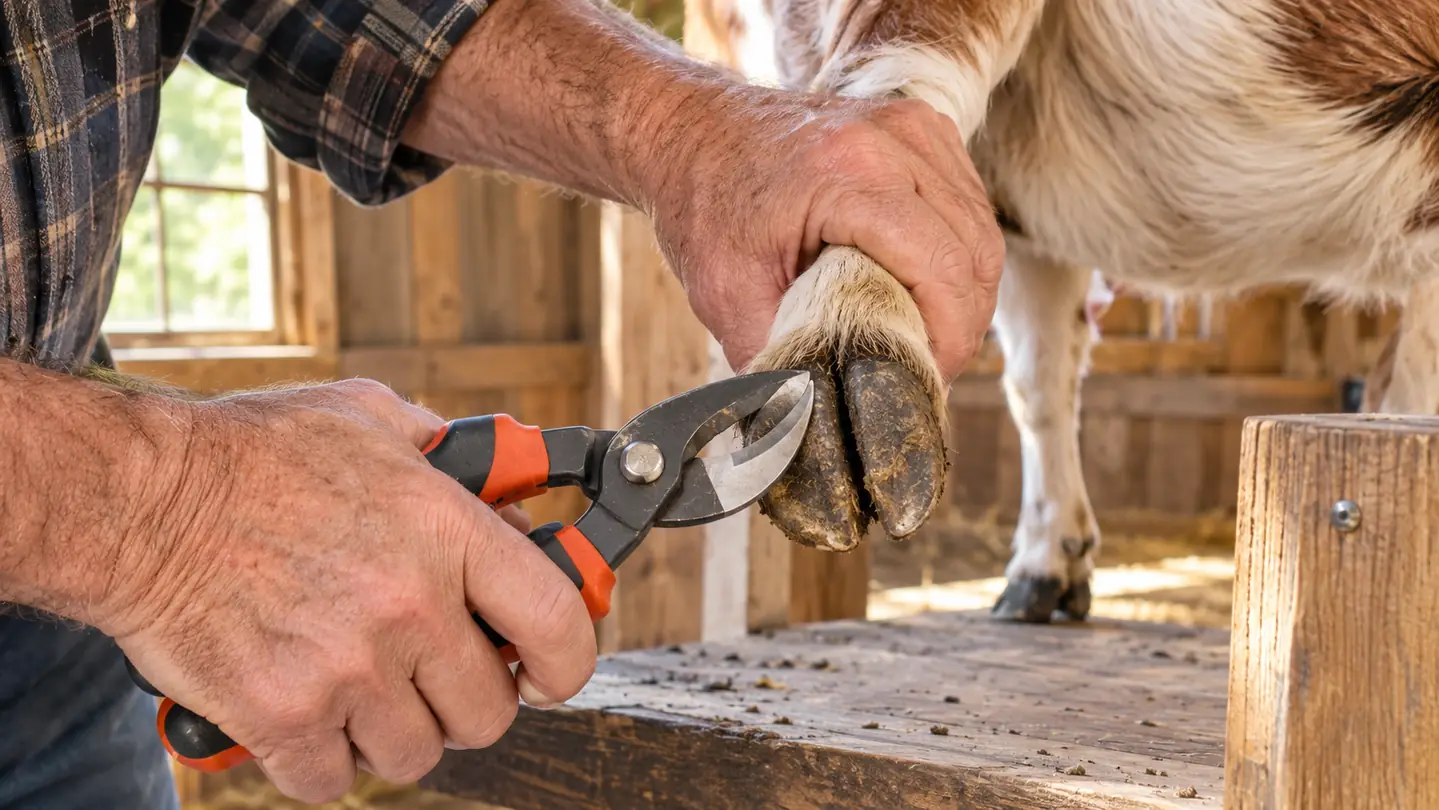
Here is what I did not understand about hoof horn. It is not a fingernail you can nibble down any old way. A clean cut leaves a flat surface that wears evenly. A crushed cut leaves a ragged edge, a ragged edge splinters, and a splintering hoof is a goat that limps for a week. The snips were not cutting. They were crushing. That is the difference the Hongmei Outdoors trimmers made in one afternoon, and it is the only reason I am writing this down.
Some of what I like is small and specific. The blade is 2.2 inches long with a cutting width of about 1 centimeter, which sounds tiny until you hold it against a Nigerian Dwarf hoof and remember that a dwarf goat hoof is not a large object. The point is round rather than sharp, so when Pepper shifts her weight and my hand slides, I am not punching a hole in anything I cannot fix. The handles are thermoplastic rubber, curved under my fingers, with a wrist strap that has saved them from the straw more than once. There is a switch lock, so they stay closed in the bucket instead of opening up and nicking whatever else is in there.
I am not going to tell you I have never nicked a goat with them. In 2023 I took a slice too deep on Pepper and drew blood. It was not much. Pressure and blood stop powder handled it and she was fine, but I felt sick about it for two days. The lesson was mine and not the tool's: thinner slices, more often, and let the blade do the work instead of leaning on the handle.
Same three does, same milk stand, same Saturday. It went from an hour and a half of wrestling to about twenty minutes.
The garden snips went in the trash that week
Eight inches, carbon steel, bypass blade, round point, spare spring in the box. If your goats run from you on trimming day, this is where I would start.
Amazon See Today's Price on Amazon →What it looks like now. Three does, every six to eight weeks, on the milk stand in the shed. Ron stands at the head if one of them is feeling opinionated. I pick the packed dirt out of the sole, take a thin slice off the wall, and check that both sides of the hoof sit level. Hazel takes five minutes. Pepper takes ten and complains for eight of them. Clover is three and still decides every spring that she has never met me before. The Hongmei Outdoors trimmers have done every one of those trims since 2023. Three goats, roughly seven times a year.

One more thing about our ground. Piedmont clay holds water, and wet horn softens. By February the does come in with hooves that cut like a bar of soap, and I take smaller slices than I would in August. On the wet weeks I run a hand over each hoof while I am out there anyway, just to feel whether anything has started to curl.
The care is simple but it is still care. Carbon steel will rust. I rinse them, dry them on a rag, and put them back with the lock on. If I leave them wet on the milk stand overnight I find spots in the morning, and the spots are my fault, not the tool's. The spare spring is still in the drawer, unused. I have used them exactly twice on the blackberry canes behind the shed, which the listing says is fine and which I would not make a habit of if you want them clean for hooves.
Where they stop. These are hoof trimmers. They are not a veterinarian. If a hoof is cracked up above the hairline, if there is heat or swelling, if a goat is lame and you cannot find the reason, that is a phone call, not a Saturday project. I trim what needs trimming and I call the vet for the rest. I am not a vet and I am not going to write like one.
What I'd Tell You If We Were Sitting at My Kitchen Table
I would tell you that the tool is not the hard part, the timing is. Most people who end up with a lame goat did not buy the wrong trimmers, they waited four months instead of six weeks. Put the date on the calendar next to the milk records and do all three does in one sitting while the stand is already out. If your hands are arthritic, and mine are heading that way, the curved handle and the spring matter more than the name on the package.
And I would tell you to stop making do. I made do with garden snips for two years because they worked well enough that I never got around to replacing them, and well enough is how you end up with a goat that limps and a Saturday you do not get back. Buy the trimmers. Rinse them. Dry them. Take thin slices.
Twenty minutes, three does, every six to eight weeks
Carbon steel bypass blade, 8 inches, round point, spring loaded, spare spring included. The pair I should have bought in 2021 instead of making do.
Amazon Check Today's Price on Amazon →