
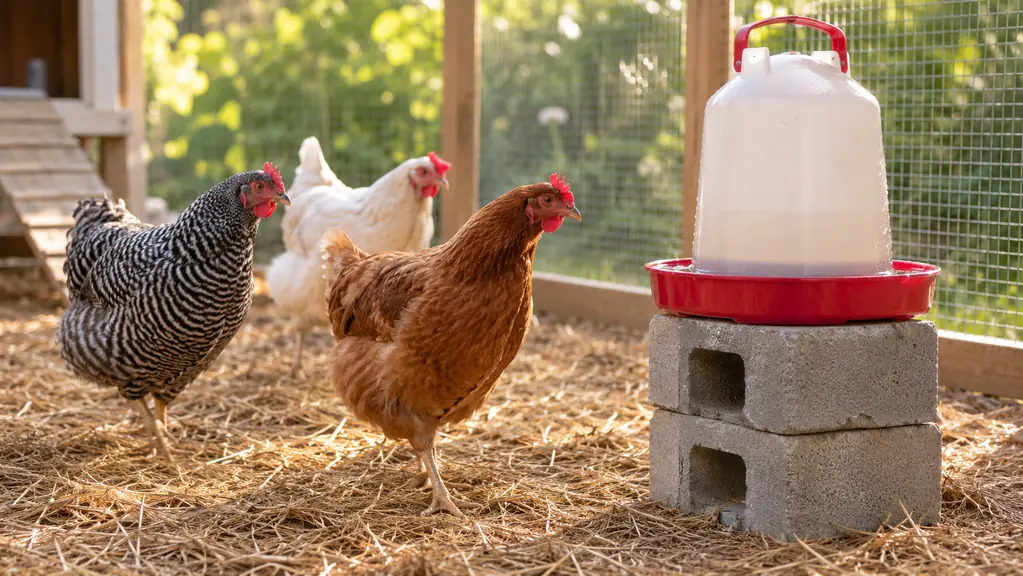
The first summer I kept hens, I dumped more water on the ground than I ever got into them. Those little plastic waterers sat out in the run, the hens scratched bedding into the trough, and by the third hot day the water had a green film on it and a smell that reached you before you got the lid off. I would tip it out, rinse it, fill it, and do the exact same thing again that evening. Twice a day, all summer, and half the flock still would not drink from it.
Here is what nobody told me: most of that mess was not the hens. It was the open pan. In March 2024 I finally swapped the whole routine for a Harris Farms Easy-Fill Poultry Drinker, the 6.25 gallon gravity-fed model, and the daily water chore mostly disappeared. Harris Farms built it around two plain ideas. A top-fill lid so you never flip a full waterer upside down. And a float valve that holds a steady level in the trough instead of letting it swing between brim-full and bone dry.
What follows is not a product manual. It is the routine I actually run on 14 laying hens in a covered run outside Siler City, in order, including the two things I got wrong for most of a season and the winter mistake I will not make twice.
Fourteen hens, one drinker, one refill every four days
The 6.25 gallon Harris Farms drinker holds enough for a small to medium laying flock, so July stops being a twice-a-day water run. Gravity does the metering. The top-fill lid does the rest.
Amazon Check Today's Price on Amazon →The Routine, Step by Step
Step 1: Set it on a stable base, out of the litter line
There is one spot in my covered run that stays dry in a downpour, and that is where the drinker lives. It sits on two stacked cinder blocks, which puts the trough roughly at the height of a hen's back. That sounds fussy. It is not. A drinker sitting on the ground collects everything the flock kicks up, and I mean everything: shavings, feed dust, droppings, and the fine grit they bathe in all afternoon. Raising it a foot off the litter removes most of that problem before you ever pick up a brush.
The blocks matter for a second reason. A full 6.25 gallon drinker is close to fifty pounds of water. Set that on soft litter and it settles crooked, and a crooked drinker tips water out of the trough every time a hen lands on the edge. Two cinder blocks on packed ground, checked once a season, keeps it honest and keeps the litter under it dry instead of soured.
I also keep mine under the roofed section rather than out in the open yard. Rain splashes mud up the sides of anything left exposed, and August sun on a full drinker warms the water fast, which is exactly how you get a bloom of slime by the second day. Shade is not a luxury here. It is half the reason the water stays drinkable between refills.
Step 2: Fill it from the top and let the float valve set the level
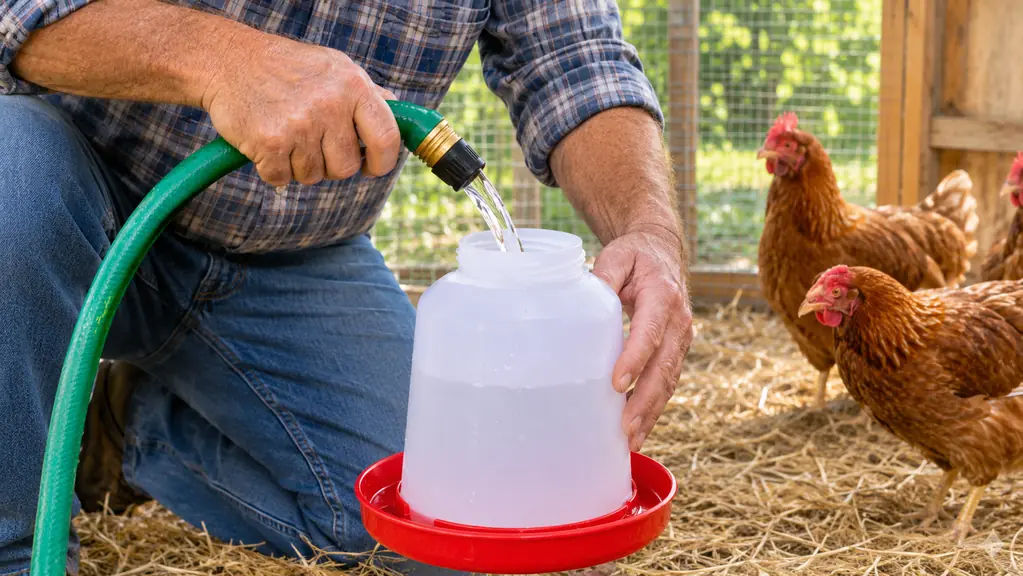
Fill from the top. That is the whole reason I bought this one. The lid comes off, you drop a hose in, and you walk away and do something else. No flipping a full waterer upside down and trying to set it down without dumping half of it into your boots, which is what I did for five years with the small ones and what I do not miss at all.
The float valve inside does the metering. It opens as the hens drink the trough down and closes when the water is back where it belongs, so the trough stays at a steady depth all day instead of drifting from too full to nearly empty. In practice that means the water stays fresher, because you are not topping off a half-empty pan that has been sitting in the heat since breakfast. I refill mine from the hose about every four days in summer and about once a week in cooler weather.
One habit worth building: stand there for thirty seconds after you pull the hose out. If the float is working, the water settles and the flow stops. If the level keeps climbing or you hear water running when it should not, something is under the valve or the lid is not seated. That half minute is the entire mechanical check. I have done it several hundred times now and it has caught exactly two problems, both before they turned into a flooded run.
Step 3: Scrub the trough on a schedule, not when it looks bad
The trough does not need scrubbing every day, but it does need scrubbing on a schedule. Mine gets a stiff brush and a rinse every couple of weeks, sooner if the weather has been hot and still. I scrub the sides and the bottom, dump it, refill, then dump once more so no vinegar sits in the drinking water. A splash of plain white vinegar and a brush handles the slime that builds in warm weather, and slime is what puts hens off drinking in the first place.
Skip dish soap unless you can rinse it out completely, and do not fool yourself that you did. Plastic holds a film, and hens are pickier about taste than people give them credit for. If your flock suddenly starts ignoring a drinker they used yesterday, clean it before you assume anything else is wrong.
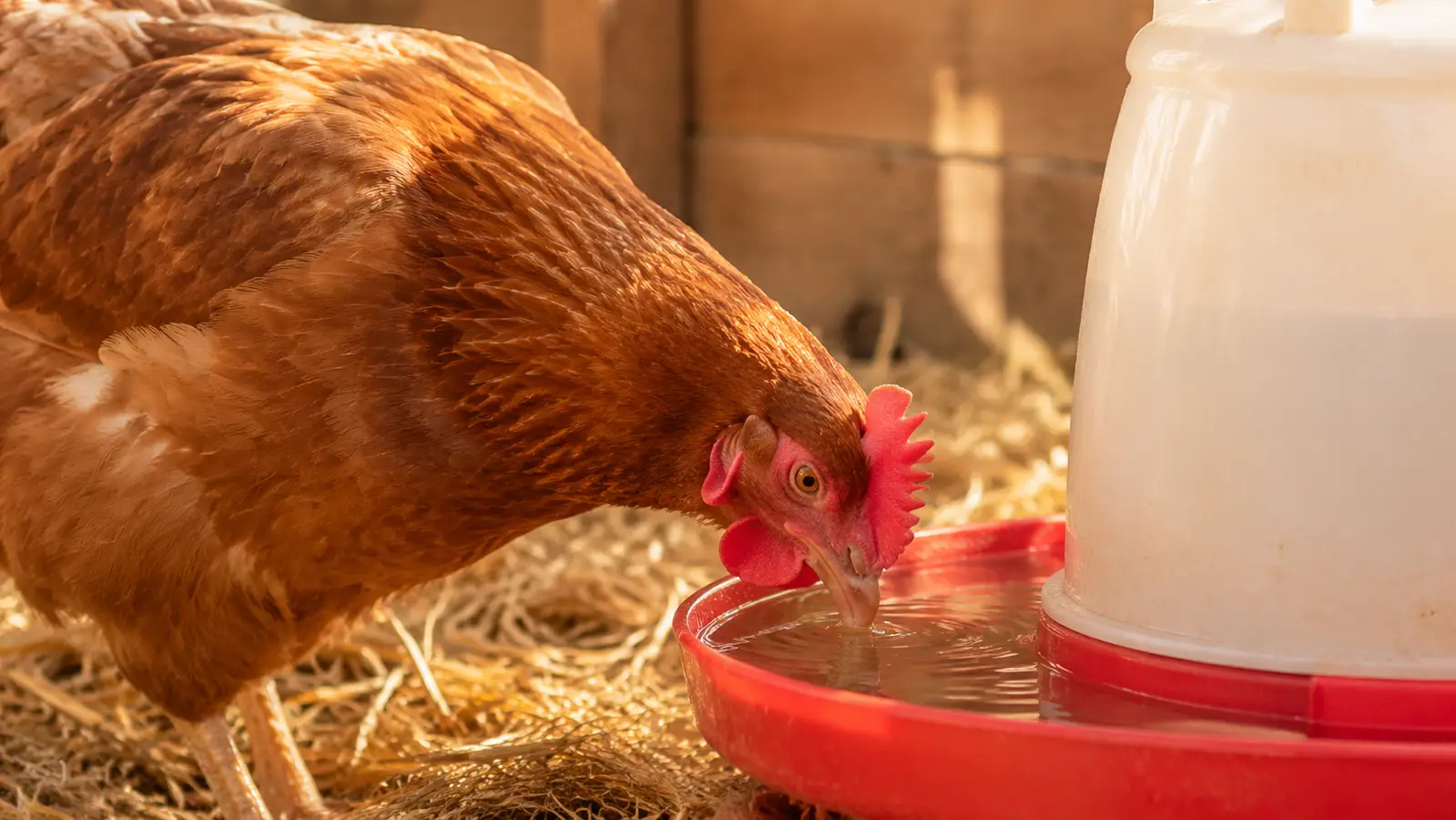
This matters more than it sounds. A hen that cuts back on water cuts back on feed, and a laying hen that cuts back on both slows down or stops laying altogether. Clean water is the cheapest thing you can do for egg production, and it costs you about ten minutes a month. I am not a vet and I do not play one on the internet, but I have watched a flock go quiet over a dirty waterer and pick right back up within a day of getting a clean one.
The change I noticed first was not the water. It was that I stopped hauling a five-gallon bucket out to the run twice a day in July.
Step 4: Learn your refill rhythm by season, not by memory
Water use moves with the weather, and it moves faster than you expect. In July, with 14 hens and shade temperatures in the nineties, I am refilling every four days whether the trough looks low to me or not. In April and October, once a week is plenty. The trick is not memorizing a number. It is walking the run on a routine and checking the level with the same glance you already give the feeder.
I check mine in the evening when I shut the hens in. Finger in the trough, look at the water, look at the sides for slime, and I am done. Thirty seconds, once a day, and it never gets away from me. The one time it did, I had been sick for three days and Ron was doing the animals, and I found the trough low and warm and full of shavings. Nobody's fault. Just proof that a routine beats good intentions.
If you keep a small flock and you are used to the little waterers, 6.25 gallons will feel like more than you need. It is not. It is the difference between a chore you do twice a day and a chore you do twice a week. And the watering is not really the point. The point is that the water is still clean at four in the afternoon on the hottest day of the year, not just at seven in the morning when you filled it. That is what the Harris Farms drinker bought me, and it is why the small ones are stacked in the barn now.
Step 5: Have a winter plan before the first hard freeze
January 2025 took mine solid. A hard snap came through, I did not get out there early enough, and the water in the trough froze into a block. The plastic came through it, but that was luck and not a plan. Freezing water expands, and a drinker that freezes full is a drinker you may be replacing in February, which is not a thing you want to be shopping for in the cold.
My fix is a heated base under the drinker. That is separate equipment, not something that comes with the Harris Farms drinker, and it is the only reason I keep liquid water through a cold snap here. The base sits on the cinder blocks and the drinker sits on the base, and I run the cord along the run framing so nobody catches a boot on it in the dark.
Even with the base, I break the surface with my boot heel on the coldest mornings and check the float valve while I am there. Cold makes plastic stiff and small problems get bigger fast. If you would rather not run power out to a coop, plan on carrying warm water out twice a day during a hard freeze and accept that a top-fill drinker is still far easier to deal with than a full one you have to flip over and set down in the dark.
What Else Helps
Shade is half the battle and it is free. A drinker in full afternoon sun will grow slime faster than one in shade no matter how religious you are about scrubbing. Mine sits under the covered part of the run, and the difference between that trough and the open side of the yard in August is not subtle.
Keep the drinker away from the feeder. Feed dust is the single biggest thing that fouls a trough, and a drinker set right beside a feeder catches every bit of it every time a hen shakes her head. Mine is on the opposite wall, and I still get a dusting on windy days, which tells you what it would look like side by side.
Watch the birds, not only the water. A hen that stops drinking, or a flock that crowds the trough and squabbles over it, is telling you something. Sometimes it is as simple as a dirty trough or a float that has stopped metering. Sometimes it is not, and that is a call to your vet, not to me. I will say the same thing about any hen that looks off: clean water is not a treatment, it is just the baseline.
Do not skip the small checks because the drinker is big. A larger reservoir holds more water, which also means a problem with the water sits there longer before you notice it. That is the tradeoff, and the evening check in step 4 is what keeps the size an advantage instead of a way to be surprised three days later.
And if you are starting from nothing, do not overbuy. One 6.25 gallon Harris Farms drinker has been the only waterer for my 14 hens since March 2024, and I have never had a day where I thought a second one would have helped. Spend the money on shade and a stable base instead. Those two things do more for water quality than any additive you can pour in.
The short version, if you are skimming: raise it, shade it, fill it from the top, scrub it every couple of weeks, and know your refill rhythm before the heat or the freeze arrives. That is the entire system. It took me five years of doing it the hard way to get down to five steps.
Two minutes at the hose, four days of clean water
The Harris Farms Easy-Fill Poultry Drinker is the 6.25 gallon gravity-fed model I have run since March 2024. Top-fill lid, float valve, BPA-free plastic. Set it on blocks in the shade and it handles the rest.
Amazon Check Today's Price on Amazon →