
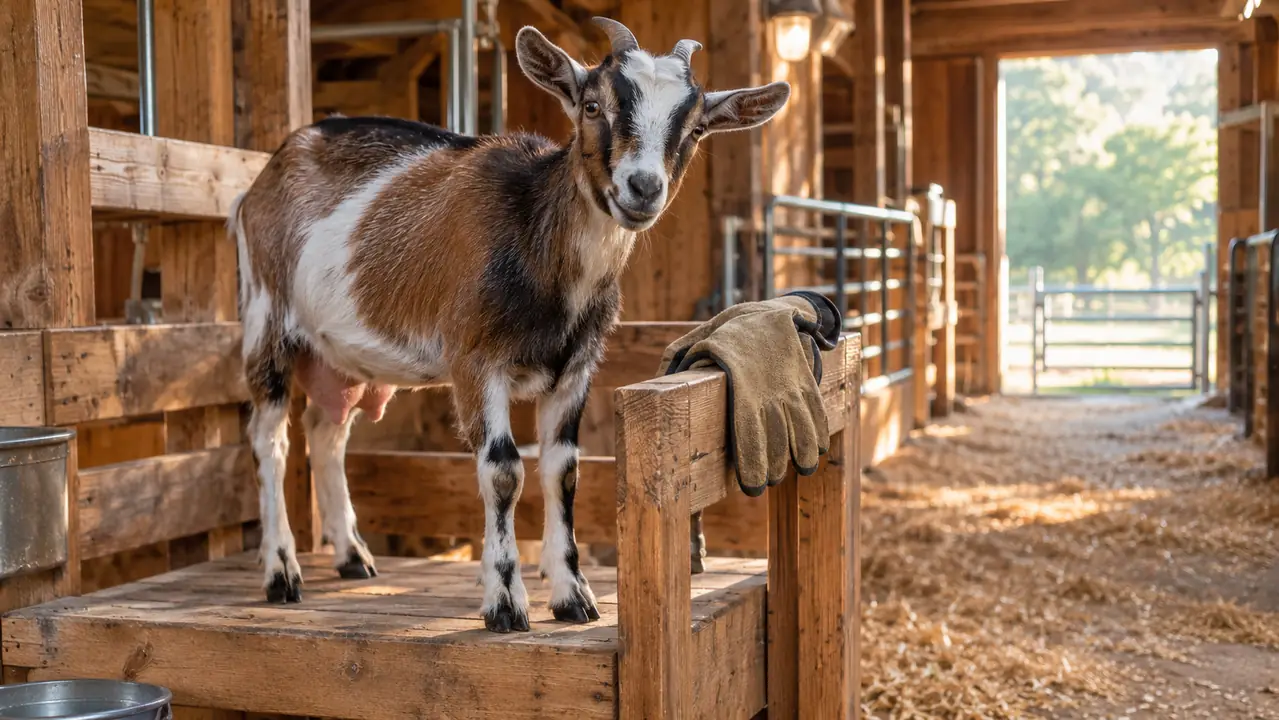
Goat hooves grow the way your fingernails grow, and if nothing wears them down they just keep going. My three Nigerian Dwarf does live in a converted three-stall shed with a fenced quarter-acre browse paddock, and that paddock is soft ground. Soft ground does nothing to a hoof. Hazel, my six-year-old doe, is the one who taught me that. By the time she was two, her toes had started to curl under at the tip and she was standing on the back of her foot instead of the flat of it. A goat that walks on its heels moves wrong all the way up, and that is not something you fix by waiting.
For two years I put the job off, telling myself the gravel along the driveway would file her hooves down the way a dog wears its nails on concrete. Then I tried garden snips from the shed. They crushed the hoof wall instead of slicing it, and the jaw spring fought me on every squeeze. What finally worked is the pair that has stayed on my stand since April 2023: Hongmei hoof trimmers, an 8-inch bypass shear with a carbon steel blade, a 1 cm cutting width, a spring that reopens the jaws between every squeeze, and a switch lock that keeps them shut in the drawer.
What follows is the exact sequence I run on all three does every six to eight weeks. It takes me about twenty minutes for the three of them now. The first time, it took an hour and I apologized to everybody involved.
The 8-inch bypass trimmer I have trusted with three does since April 2023
Carbon steel bypass blade, a 1 cm cutting width, a spring that reopens the jaws between every squeeze, and a spare spring in the box. It is the only hoof tool on my stand now.
Amazon Check Today's Price on Amazon →Step 1: Set the Stand Up Right and Line Up a Second Pair of Hands
A milk stand at the right height changes the whole job. Mine puts the goats' feet near my waist, so I am not bent over for twenty minutes with my back complaining. The platform sits about thirty inches off the shed floor, which is where Ron landed after we cut the legs down twice. A rubber mat on the platform keeps hooves from sliding while I work. If your stand has a head catch, use it. A doe who cannot pull her head back is a doe who stands still.
I do all three of mine with Ron holding a head if needed, and I would tell anyone with a nervous goat to find a second person before trying it alone. Goats are stronger than they look once they decide they are finished. Catch or tie so she can shift her weight but cannot step off sideways. Put a rag and a tin of blood-stop powder on the stand rail where you can reach them without letting go of a foot.
Then check your tools before you start. Trimmers, rag, powder, and that is the list. The Hongmei trimmer has a wrist strap on the handle and I loop it on every time, mostly because I once dropped a pair of snips into a shavings pile and spent twenty minutes finding them. I also open and close the jaws a few times before the first goat gets on the stand, just to hear that the spring is doing its job and nothing has rusted shut since the last trim. Two minutes of fussing here saves a world of trouble when you have a hoof in one hand.
Step 2: Pick the Foot Up by Bending the Knee and Read the Sole First
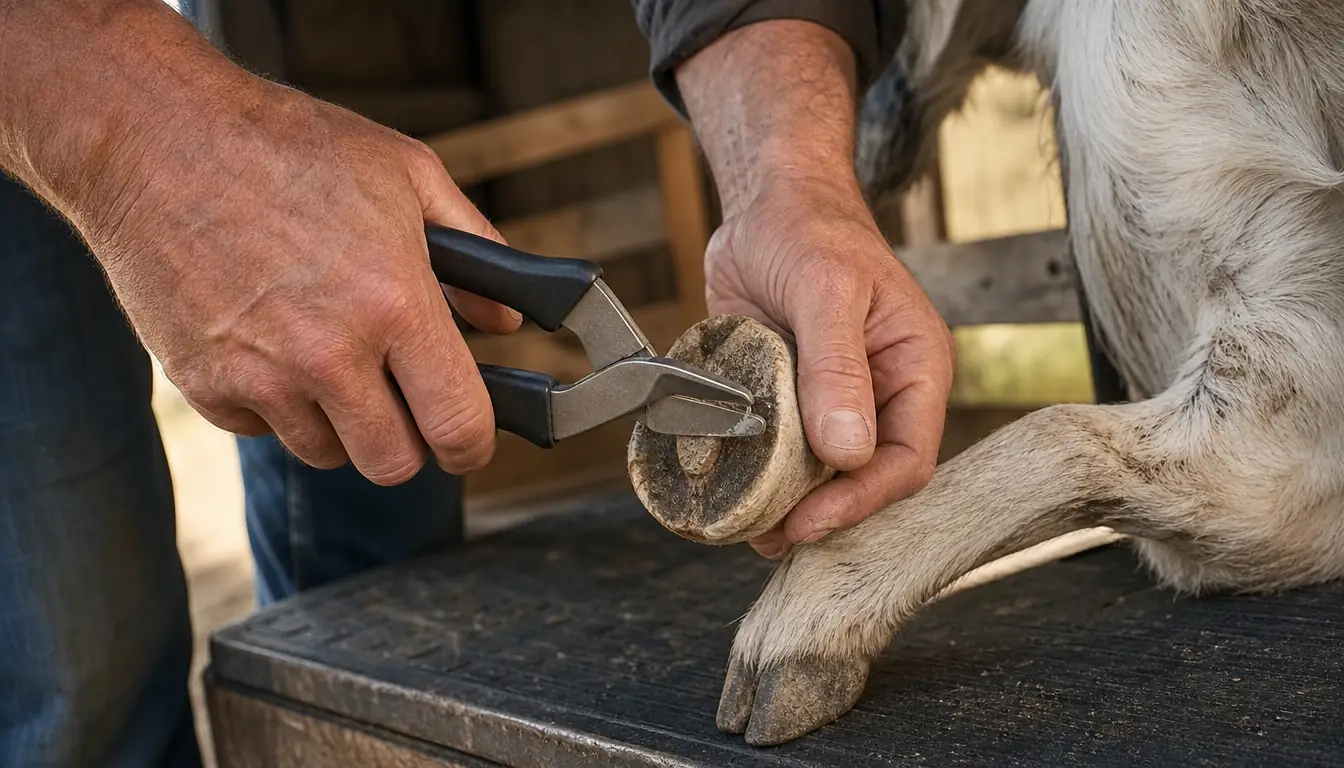
Do not yank a goat's leg out to the side. Lift a front foot by bending the knee back, the direction that joint already goes, and let her lean into you. Rear feet come forward under the belly. If she plants and refuses, set the foot down, reset her stance, and try again. There is no prize for winning the argument.
Before the blade touches anything, look at the sole. You want to see three things: the hard outer wall, the flatter sole inside it, and the softer heel bulbs at the back. On a light hoof, a pink tinge near the tip is the quick, the live tissue with blood in it. On a dark hoof you cannot see it at all, which is exactly why you go thin instead of bold. Hazel has one dark front foot, and it took me a season to stop guessing at it and start taking the shallow passes I take on all the others.
Look at the shape as well. A front hoof should be rounder. A rear hoof is longer and more oval, closer to a teardrop on a goat that has been standing on soft ground most of her life. Knowing which foot is in your hand before you cut keeps you from taking the wrong amount off the wrong end.
And look at the goat, not just the foot. If she is flinching before you have cut anything, she is telling you something hurts, and that is a different conversation. Heat, swelling, a bad smell, a split running up into the hairline: put the trimmers down and call the vet.
Step 3: Take Thin Slices Off the Heel and Sole, Not One Big Bite
This is the part I got wrong. In 2023 I took one thick slice off Pepper's front foot and went too deep. A little blood, steady pressure, blood-stop powder, a goat who was barely bothered and a person who was bothered for a week. She was fine. I have taken thinner slices ever since, and I keep the powder tin open on the rail rather than digging for it after the fact.
The right cut runs the flat of the blade across the sole in small bites, working from the heel forward and looking at the surface after every pass. That 1 cm cutting width is a feature, not a limitation. It means each squeeze removes a shaving instead of a chunk, so you can stop while you are still on the safe side of the quick. On Clover, my youngest doe, the whole front foot is usually four passes and about a quarter inch of horn, and I check between every one.
The spring helps more than I expected. Garden snips have to be pried open with your fingers between every cut, and by the twentieth cut your hand is cramping and your slices get sloppy. The Hongmei jaws open themselves, so the squeeze is the only work your hand does. Keep the flat of the blade against the hoof, cut away from your own fingers, and let the round point ride on the sole instead of digging at it. The blades are ambidextrous, which matters if you have a goat who only gives you the left side without a fight.
Two or three thin passes beat one confident one. I learned that on Pepper in 2023, with blood-stop powder in one hand and a good deal of regret in the other.
Step 4: Square the Walls and Check the Toe From the Side
Once the sole is flat and the heel is down to a sensible height, run the blade along the wall to knock off any ledge that overhangs the sole. You are not trying to make it pretty. You are trying to get the goat standing on a flat surface instead of balancing on a rim of horn. Take the wall down until it sits level with the sole all the way around the foot.
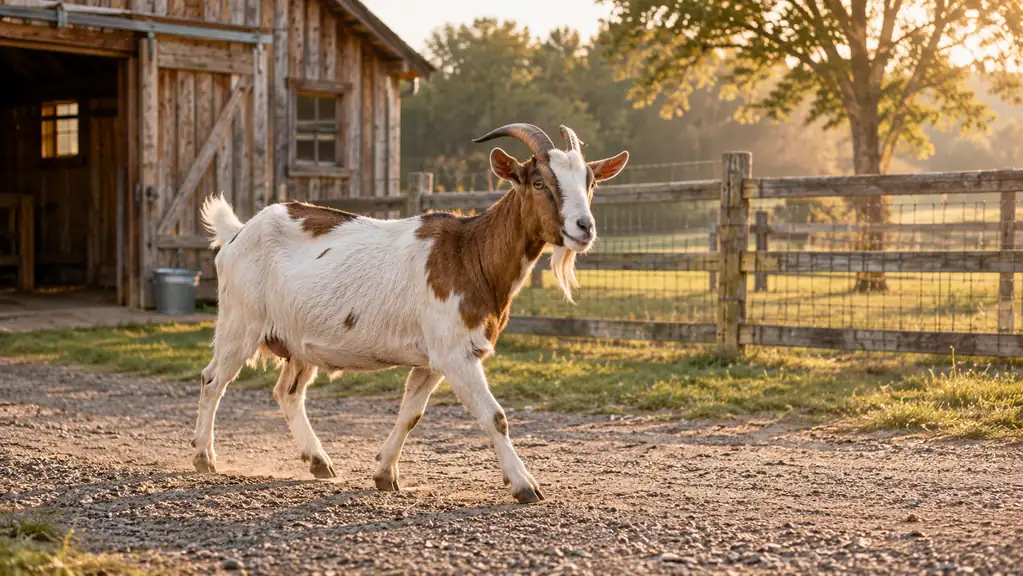
Then set the foot down and step back. From the side, the line from the hairline at the top of the hoof down to the ground should be close to straight, and the goat should be standing on the flat of the foot rather than tipped back on her heels. From the front, both toes should meet the ground at the same time. My cheat is the shed doorway: I walk each doe across the concrete threshold where the light is better, crouch down, and look at the toe line from the side before I let her go back to the paddock.
Walk her a few steps on a hard surface before you call it done. A goat that was walking on curled toes moves differently right away, and that is the check that matters. If she is still tipping, look again before you cut again. It is easy to take off a little more and impossible to put any back. If she is lame a week later and not improving, that is a vet call and not a trimmer problem.
Step 5: Rinse, Dry, Lock, and Write the Date on the Calendar
Hoof trimming is easy to forget. Mine go every six to eight weeks, and if I do not write it down, eight weeks quietly turns into twelve and then into a phone call I did not want to make. There is a paper calendar hanging in the shed. When I finish the last doe I write the date and count forward seven weeks. That one habit has done more for my goats' feet than any tool I have bought.
After the last hoof, rinse the blades, dry them well, and put a drop of oil on the pivot. Carbon steel will spot if you leave hoof dirt and damp on it overnight. That is not a theory. I left mine once on the stand rail on a humid June evening and came out the next morning to a fine orange bloom along the flat of both blades. It wiped off and cut fine, but I have dried them properly since. Close the switch lock so nobody reaches into the drawer and grabs an open jaw, and check that the spare spring is still in the box. Since April 2023 these Hongmei blades have cut through three does worth of horn every six to eight weeks and they still slice clean, which is more than I can say for the snips they replaced.
Then wipe down the stand, dump the shavings, and give the goat her grain. Do not let it turn into a wrestling match that ends with everybody cross. Ten quiet minutes with a doe who trusts you beats five minutes of force every single time, and next time she will get on the stand without being asked twice.
What Else Helps
The trimmer does the cutting, but it is not the whole job. Dry bedding in the shed matters more than most people think, because a goat standing in wet litter ends up with soft hooves that crumble at the wall no matter how carefully you trim. A flat concrete pad or one big flat rock near the water gives hooves something to wear on between appointments. Loose minerals offered free choice support hoof growth, and your vet is the right person to tell you what your particular ground is short on. I am not a vet and I do not pretend to be one.
It also helps to know where your own limits are. Heat, swelling, a bad smell, a split that runs up into the hairline, a goat who is lame and not improving after a week: those are vet calls, not trimmer calls. A normal trim is horn, no blood, no drama. Anything past that gets a phone call. I would rather pay for an office visit than explain to myself later why I did not.
One more thing worth knowing is that this is not a single-species tool. The listing covers goats, sheep, lambs, alpaca and pig hooves, and I have used mine on a neighbor's sheep without any trouble. A gardener I know keeps a pair for woody stems, which sounds strange until you hold them and feel how clean the bypass cut is. For what it costs against a vet visit for one overgrown hoof, keeping a second pair in the barn is not a foolish thing to do.
If your doe is walking on her heels, start here
8-inch carbon steel bypass blades, a 1 cm cut, spring loaded so your hand does not cramp halfway through the third goat, and a switch lock that keeps them shut between trims.
Amazon Check Today's Price on Amazon →