
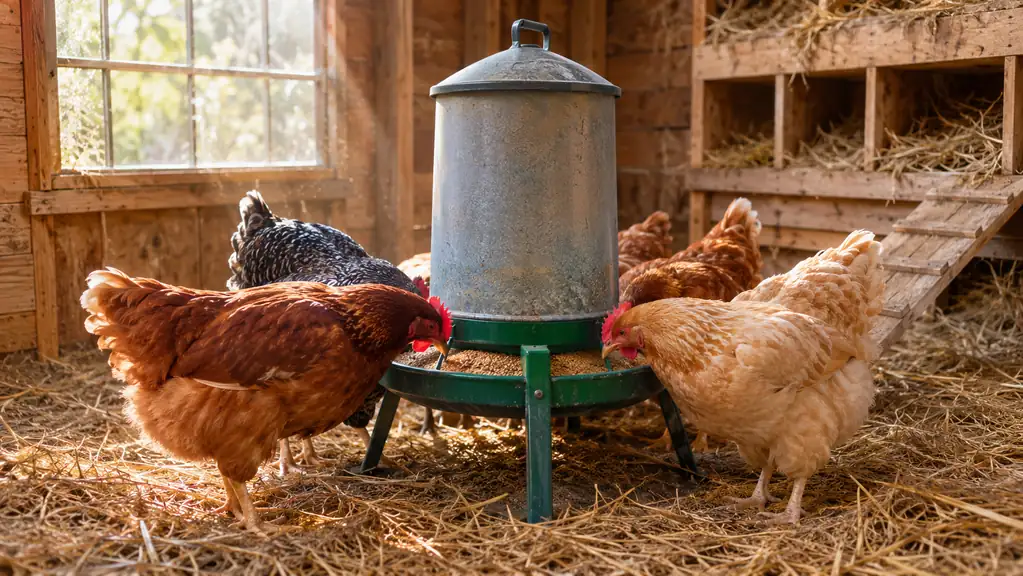
The first thing I want to get out of the way is that the RentACoop 25lb Chicken Feeder did not solve my rat problem. I bought mine in May 2024 because rats and wild birds were cleaning out an open trough feeder faster than my fourteen hens could eat, and I had talked myself into believing that a closed feeder with a lid would put a stop to it. It did not. What it did do was cut the amount of feed kicked out onto the coop floor, and after a year and a half of filling it about once a week I have a clear picture of what it does well, what it does not, and where it will irritate you on a cold morning.
So this is not the review that tells you it changed my life. It is the review I wish somebody had handed me in the farm store parking lot, with a bag of layer pellets under one arm, while I tried to work out whether the plastic tub feeder I already owned was actually the problem or whether I just wanted to buy something.
The Quick Verdict
A sturdy, easy-to-fill feeder that cut floor waste in my coop inside a week. It is not rat-proof, the port covers are manual, and assembly takes longer than the box suggests.
Amazon Check Today's Price →If loose pellets on the coop floor are your daily annoyance, this is the fix I actually kept
Four wide ports, a lid with a handle, an anti-roost cone on top and an adjustable stand. It held up for eighteen months in my coop with fourteen hens on it. Today's price is worth a look before you buy another open trough.
Amazon Check Today's Price on Amazon →How I Actually Use It
It stands on its adjustable stand in the middle of the coop floor with the anti-roost cone sitting on top. That cone matters more than it sounds like it should. My hens liked to roost on the lid of the old feeder, and the mess that produced is the reason I quit using that feeder at all. Nothing roosts on the cone. They try it once, they get off, and they go back to the roost bar where they belong.
Fourteen hens on one feeder works out fine. The four ports are wide enough that three or four birds can eat at the same time without shoving each other off, which cut down a lot of the squabbling I used to see around a single small opening. I fill it with layer pellets roughly once a week, sometimes a day sooner if the weather has them eating heavy. The lid with the handle lifts off cleanly and goes back on just as cleanly, which sounds like a small thing until you have owned a feeder where it does not.
The routine has settled into something I can do half asleep. I let the hens out a little after six, slide the four port covers back, and check the level through the opening. If it is low I bring the scoop and top it off. That is the whole thing. On a wet morning in January, when the run is a mud slick and I am out there in muck boots with a headlamp because Ron is still asleep, the difference between this feeder and the old tub is simple. The old tub needed feed every single morning. This one needs it on Sunday. I fill on Sunday, top off on Wednesday if I am feeling generous, and I do not think about it again.
The ports have sliding covers and I close them at night. I want to be plain about this: the covers are manual. They do not close on their own. Nobody should buy this thinking it seals itself at dusk or that it is predator-proof. I slide them shut when I shut the coop and open them again when I let the hens out in the morning. That is a thirty second job I built into the routine, and I would rather have honest covers I control than a mechanism that fails in the cold.
Cleaning is a once a month job in my book. I tip whatever feed is left into a bucket, brush the corners out with a stiff brush, wipe it down with vinegar and water, and set it in the sun to dry before I put feed back in. Doing that has kept it from getting that sour smell older feeders get in the seams. It dries faster than I expected, which is one small point in its favor that nobody mentions.

The Setup Is Not a Five Minute Job
The box has the feeder body, a lid with a handle, four large ports, the anti-roost cone, the adjustable stand, and a 13mm magnetic driver bit for putting it together with an electric screwdriver. I want to say something about that bit. It is the sort of small kindness that tells you somebody at RentACoop has assembled their own product instead of just designing it. I did not have to go dig through Ron's toolbox hunting for the right size, and at my age that alone buys some goodwill.
Even with the correct bit, set aside more time than you think. I put mine together on the porch with my reading glasses on, and it took a solid forty minutes. Most of that went to figuring out which port went where and getting the screws started straight instead of cross threaded. If you are the type who assembles things on the kitchen table at nine at night, do it on a Saturday morning with good light instead. The stand has storage built into it, which kept the loose pieces together while I worked and kept me from losing a screw in the grass.
One thing the listing does not make clear: the title says 25 pounds and the spec line says 20. I have stopped worrying about which number is correct. What matters is that a week of feed for fourteen hens fits with room to spare, and it does. The unit itself measures about 14 inches by 12 inches by 11 inches and weighs under three pounds empty, so it is not the chore to move around that a full metal bin would be. If you keep a bigger flock than mine, you will be filling it more often than once a week, and that is worth knowing before you buy.
I made one mistake worth passing on. I set the stand up first and screwed the ports on with the feeder body sitting on the porch floor, which meant I was leaning over at an awkward angle the whole time and kept having to roll it to reach the far side. Halfway through, one screw went in crooked and I had to back it out and start again. If I were doing a second one, I would lay the body upside down on a towel on a table at waist height, fit all four ports from that position, and mount it on the stand last. It would have saved me fifteen minutes and a good deal of muttering.
The Feed Waste Question, Answered Honestly
Here is the mechanism as best I can tell from watching them. A hen eating out of a trough stands beside the feed and throws her head back to swallow, and a good bit of what she picks up ends up on the floor behind her. With these wide ports she puts her head down into the opening and eats more or less level, and the pellets that would have been flung land back in the hopper instead of in the litter. Within a week I noticed I was no longer sweeping a scoop of pellets off that floor every morning, and I have not gone back to sweeping daily since.
What it will not do is solve a rodent problem. Rats are persistent and clever, and a feeder with four open ports is not a lock. I lost feed to rats before this and I still find signs of them now and then, usually around the door where the scratch grains live. What changed is the volume. There is far less loose feed on the floor for them to find, and with rats that is most of the battle. If you want something rats cannot get into at all, this is not that, and I do not believe any feeder with open ports is.
The other thing to know is that feed can clump. In a heavy humid stretch in late summer I opened the lid and found the top layer of pellets caked together enough that the hens had to work at it. A quick stir with the scoop fixes it, and now I check and stir every few days when the air is thick. That is not a defect in the feeder so much as a fact about pellets in July in North Carolina, but nobody tells you and then you find it on your own.
I did keep count for a while, because I wanted to know whether this was actually saving me anything or whether I just felt better about it. For the six weeks before I switched, I was opening a fifty pound bag of layer pellets every eighteen days or so and still raking a scoop of waste off the floor most mornings. After the switch, the same bag lasted twenty four or twenty five days. Nothing about my flock changed in that stretch. Same fourteen hens, same feed, same weather, same me forgetting to shut the run gate. That is the number that convinced me, and it is the number I would give anybody who asked whether the money was worth it.
I stopped sweeping pellets off the coop floor every morning. That was the entire reason I bought the thing, and on that one count it delivered.
What I Liked
- Cut loose feed on the coop floor noticeably within the first week
- Four wide ports let several hens eat at once without crowding
- Anti-roost cone keeps birds off the top and keeps the lid clean
- Lid with a handle lifts off and seats easily, even when full
- 13mm magnetic driver bit included, so assembly needs no hardware hunt
- Metal and plastic body has held up eighteen months inside a coop with no rust found
Where It Falls Short
- Not rat-proof and not predator-proof, ports stay open until you close them
- Sliding port covers are manual, no automatic closing of any kind
- Assembly ran about forty minutes, longer than the box implies
- Feed clumps in humid weather and needs stirring
- Lid is a two-hand job in cold weather with gloves on
- Capacity is stated two different ways on the listing, 25 pounds in the title and 20 in the specs
What Has Held Up After Eighteen Months
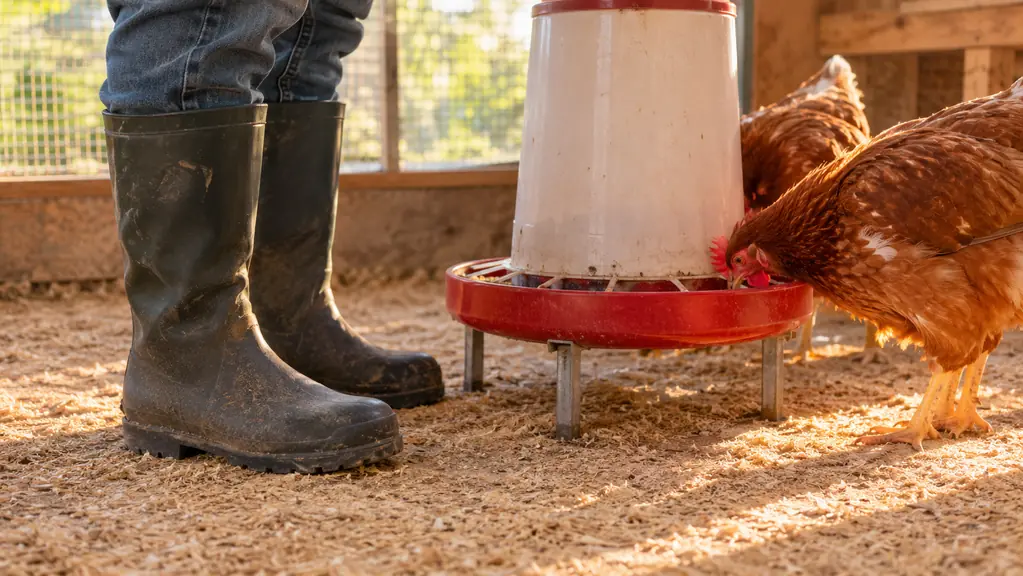
Mine lives inside the coop, which stays dry but is not climate controlled, and it has seen everything from single digit nights to a hundred degree afternoons. After a year and a half there is no rust I can find anywhere on it and the lid still seats the way it did the first day. The handle on the lid has held. The sliding covers still slide. The stand has not wobbled or worked itself loose, and I move the whole thing out of the way when I do a deep clean twice a year.
What has not held up as well is my patience with the lid in cold weather. It is fine, it is just stiff when the temperature drops below freezing, and it is a two hand job when I am wearing gloves. That is a small complaint from a woman who has thawed a frozen waterer with a heat gun, so weigh it accordingly. The other honest note is that this is a plastic and metal feeder, not a welded steel box. If you have a goat or a horse that will lean on it, it will not survive that. Inside a coop with chickens, it is fine.
Twice a year I pull everything out of the coop, scrape the floor, and hose the whole business down. The feeder comes apart enough to get a brush into the corners and goes back together without any fuss. I have not had a screw strip or a port crack through three of those cleanings. The one place I watch is the seam where the ports meet the body, because that is where feed dust collects and where I would expect trouble first. So far it has been nothing a toothbrush and a vinegar wipe could not handle. A welded steel feeder would give me more confidence over ten years, but for what this is, it is holding its own.
Who This Is For
This is for the keeper with a laying flock somewhere between six and twenty birds who is tired of raking pellets out of the litter every morning. If your hens currently eat from an open trough, a pan, or a homemade PVC setup that dumps feed on the ground, the RentACoop feeder is a genuine step up on waste alone, and the anti-roost cone and the lid will save you a second kind of mess you have probably stopped noticing. It also suits a keeper who is in and out of a walk-in coop every day and wants a feeder they can top off from a standing position without unhooking anything.
It also suits anyone who wants a feeder that stands on the floor rather than hanging from a chain. Fourteen hens on one unit is comfortable, and the adjustable stand means you can set the height where your birds actually are instead of where the ceiling hook happens to be. If you have thought about how much feed you are throwing away each month, this is the kind of purchase that pays you back in bags of pellets you do not have to buy. Start with one, see how your flock takes to it, and add a second later if you end up with more birds than you planned on, which is how it usually goes.
Who Should Skip It
Skip it if rats or raccoons are your main problem rather than waste. This feeder does not seal, the covers are manual, and a determined rodent will get to feed that is left out overnight. If your coop is not secure, spend the money on the coop first. I say that as someone who learned it the hard way, with a fox taking two hens on an evening Ron and I were late getting home.
Skip it too if you want something you can hang, if you keep many more than twenty birds on a single feeder, or if you are not willing to spend forty minutes with an electric screwdriver on assembly day. And skip it if you want a feeder that opens and closes on its own, because RentACoop did not build that and anyone who tells you otherwise has not owned one. If your flock is small, under six birds, the open pan you already own is probably fine and this is money you do not need to spend.
One fill a week, four ports, and a lot less sweeping
It is not rat-proof and it is not automatic, but it is the feeder that stayed in my coop when the trough feeder did not. If feed waste is the problem you are actually trying to solve, this one earns its place on the coop floor.
Amazon Check Today's Price on Amazon →