
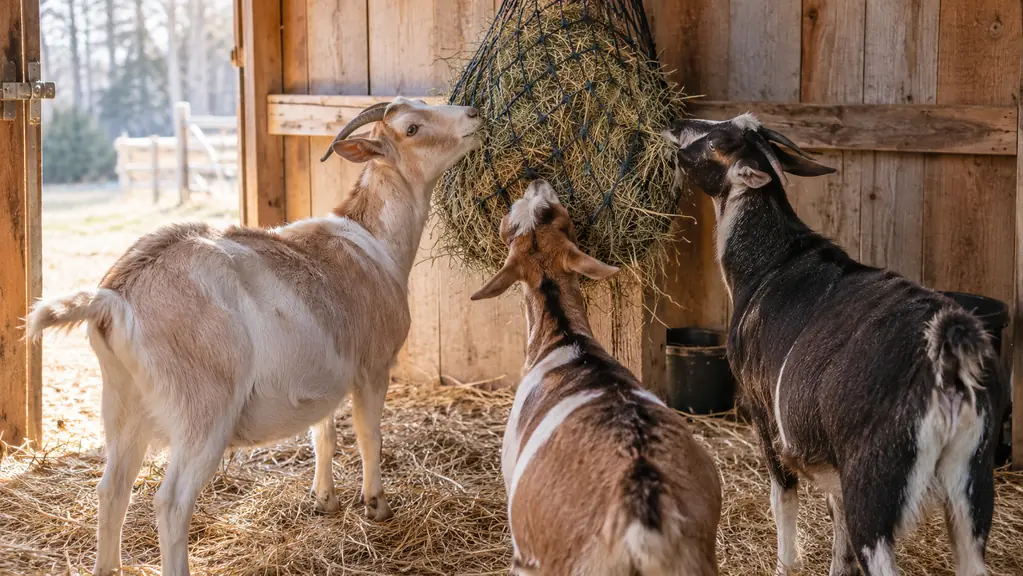
I bought the Tough 1 Slow Feed Hay Net in November 2024 because my three Nigerian Dwarf does were treating a hay rack like a salad bar. Hazel, Pepper and Clover would pull a mouthful, drop half of it in the straw, then go back for more. By the end of the week I was pitching a wheelbarrow of wasted hay out of the shed. I wanted something simple to hang on the wall, not another piece of equipment to scrub. The Tough 1 net was small enough to hang out of the way and simple enough that I could fill it with one hand. I have used it through a full winter and into spring, filled once a day when the goats are on hay. It cut my waste by roughly half. It also taught me a few things the listing does not tell you, starting with the fact that a 2-inch opening is not much of a challenge for a goat.
I am not a veterinarian and I do not play one in the barn. This is a review of a feeding tool, not advice on goat nutrition. If a goat is losing weight, coughing, or off feed, call your vet. What I can tell you is how this net behaved with three disbudded does in a converted three-stall shed, hung from an eye bolt at about head height. That setup matters more than the net itself, and I will get to why.
The Quick Verdict
A simple polyester net that cut my goat hay waste by about half. The 2-inch openings are not much of a slow feeder for goats, and it ships with no hardware.
Amazon Check Today's Price →See the Tough 1 Hay Net on Amazon and Check the Opening Size
The 2-inch knotted openings are the whole story with this net. If that suits your animal, it is a simple way to stop hay from landing in the straw.
Amazon Check Today's Price on Amazon →How I've Used It
I hung the net from a sturdy eye bolt on the shed wall, at about the height of the goats' heads. Then I pulled the bottom up and tied it off so no goat could get a leg or a horn caught in it. My does are disbudded, so horns are not an issue here, but I still did not want a loose bottom swinging around. The net sits near the shed door where I can reach it with a flake of hay in one hand. I fill it once a day in winter. In warmer months the goats are on browse more and hay less, so it gets filled less often.
The first week was messy. The goats nosed the net, backed up, nosed it again, and generally acted like I had hung a snake on the wall. By the second week they had it figured out. Hazel, who is the boss of the three, learned she could brace a front foot against the wall and pull a big strand through the opening. Pepper and Clover worked the lower half. That is when I realized the 2-inch openings were doing more for my hay bill than they were doing to slow anybody down.
I still use it every winter day. I shake it out when it is empty, and every couple of weeks I take it down and hose it off if it has gotten dusty or damp. Polyester does not hold much water, but hay dust sticks to it. A quick rinse and a line dry in the sun is enough. I have not had a seam fail or a knot come undone. That is with three does, not a barn full of horses, so take that for what it is.
I fill it in the morning after I milk Hazel and Pepper. I fork hay into the net until it is full but not stuffed tight. If I pack it too tight, the goats have to work harder at the bottom, and they lose interest. A loose fill works better. In a cold snap, the polyester gets stiff and the openings do not give as much. I still use it, but I do not fight it. I just fill it and let the goats sort it out. That is the routine: milk, fill, check water, check the net knot, then out to the chickens.
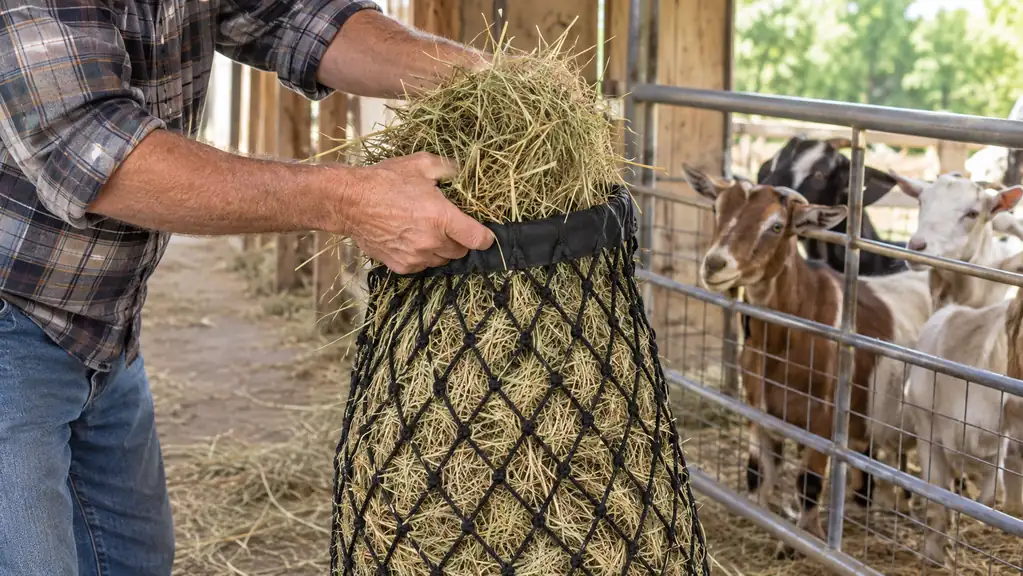
What the 2-Inch Openings Actually Do
The listing says the net has 2-inch knotted slow feed openings. That is the number to pay attention to. Two inches is wide enough for a goat to get a good mouthful without working very hard. For a horse on a dry lot, that may be enough restriction to stretch a feeding. For a goat, especially a Nigerian Dwarf with a small muzzle, it is closer to a regular hay bag with a smaller door. My does still pulled hay out in clumps. They just could not pull it out and drop it as fast as they could from the open rack.
Here is what that means in practice. My waste dropped by roughly half. It did not drop to zero. I still find hay in the straw, especially from Clover, who is the youngest and the messiest. But I am no longer pitching a third of a bale onto the floor every morning. The hay saved was enough to make it worth keeping. That is the honest math. If you are expecting a net to turn a greedy goat into a slow, tidy eater, this is not that net.
Before the net, I used an open wall rack. The does could pull a big mouthful and let half of it fall while they reached for the next bite. The net did not stop that completely, but it made them work a little longer for each mouthful. That was enough to keep more hay in the net and less in the straw. I am not going to pretend it turned them into tidy eaters. It did not. It just made the mess smaller.
The net is also listed for horses and for uses like camping, hiking, a car or the outdoors. I have not used it that way, but the size and weight make the idea understandable. It weighs 9.14 ounces according to the listing. It is a single polyester net with knotted openings, and there is nothing to adjust or switch. That simplicity is a point in its favor. It is also the reason it will not solve every feeding problem.
The Setup Detail Nobody Mentions
Nobody tells you that the net is the only thing in the package. The listing's included components line says slow feed hay net, and that is what you get. No eye bolt, no carabiner, no length of rope, no instructions for hanging it safely. I already had an eye bolt in the shed wall, so this did not cost me a trip to town. If you do not have a solid attachment point, plan for that before the net arrives. A net full of hay has some weight to it, and you do not want it coming down on a goat's head.
The bottom tie is the other thing I would tell a neighbor. A loose net bottom is an invitation for a leg to go through. I pulled the bottom up and tied it off so the net hangs in a bundle rather than a long bag. That has worked for my does. I check the knot every few days, especially after a cold snap when the polyester gets stiff. I also keep the net high enough that nobody can stand on it. A goat will stand on anything. That is not a product flaw, it is goat management.
I check the eye bolt every few weeks. A net full of hay swinging against a wall will work a fastener loose over time. I also check the bottom knot after a cold snap. Polyester gets stiff, and a knot that was tight in October can loosen by January. That is not a product failure. It is the nature of a hanging bag. The check takes ten seconds. I do it while the goats are eating.
Wasted hay dropped by roughly half, and I stopped pitching a third of a bale onto the shed floor every morning. That is the whole case for this net.
What It Does Well
The best thing about the Tough 1 net is that it is simple. I fill it, hang it, and walk away. There are no ports to unlatch, no lid to fight, no tray to clean. The polyester is light enough to carry with one hand and strong enough to take a goat yanking on it. I have not had a tear. The knotted openings have held their shape. For a small shed with three does, that is most of what I need.
It also cut waste in a way I could see. Before the net, I was filling the rack and then cleaning up the floor. After the net, I was filling the net and finding much less on the ground. The hay that did fall was usually what the goats pulled out and dropped, not what they pulled and ignored. That is a small distinction, but it is the difference between a tool that helps and a tool that just moves the mess around.
I like that it does not take up floor space. The shed is a converted three-stall, and floor space is for goats and buckets, not equipment. The net hangs flat against the wall when it is empty. When it is full, it bulges out a little, but it is still out of the way. For anyone feeding in a trailer or a small pen, that is a real advantage. The listing mentions shows and trailer use, and I can see why.
Cleaning is about as simple as it gets. I shake out the dust, and every couple of weeks I hose it off and hang it in the sun. I do not put it in the washing machine. I do not need to. The polyester dries fast, and the knotted openings do not stretch out. I have had it through one winter, and it still looks like a net, not a rag. That is a low bar, but it is a bar some hay bags fail.
The size is right for my hand. I can carry it full from the hay pile to the shed wall without dragging it. I am 57 and not looking for a workout at chore time. A net that is light when empty is still a net that gets heavy when full. This one is manageable because it does not hold a bale. That is the trade. You fill it more often, but you do not wrestle it.
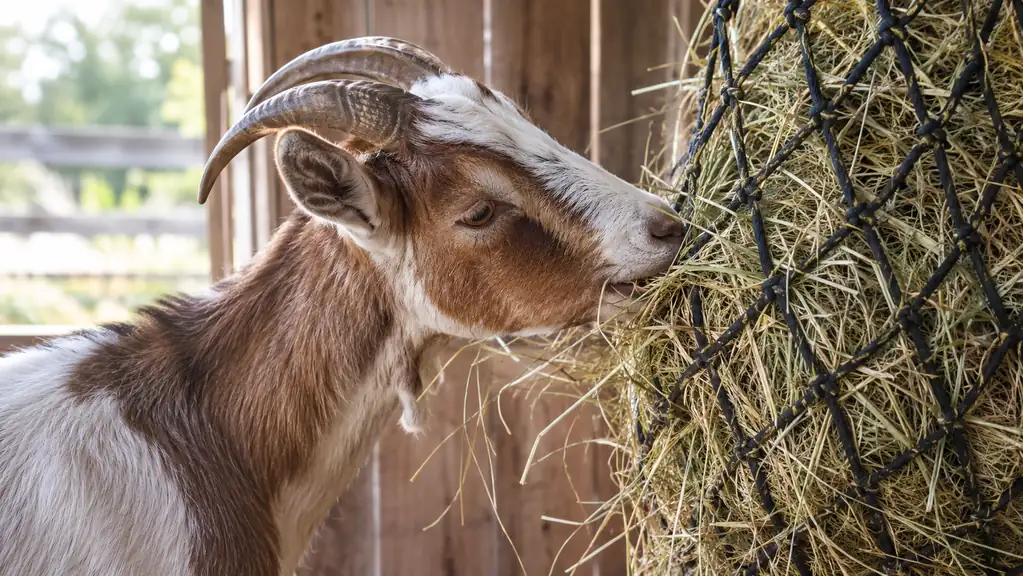
What Does Not Work So Well
The 2-inch openings are the main catch. If your goal is true slow feeding for a goat, this net is not restrictive enough. My does figured out how to pull a large strand and let the rest fall. A horse might be different. A goat is not a horse with a smaller head. I wish the listing said more about that, because the words slow feed set an expectation that this net does not fully meet for goats.
The net also has no hardware, as I said, and no real structure. It is a bag. That means it hangs where you put it, and it stays only as secure as your knot. If you have a goat that likes to chew, polyester is not going to stop them. I have not had a chewer, but I would not hang this in a pen with a goat that mouths everything. That is not a defect in the net. It is a mismatch between the net and the animal.
The net is not great in wet weather. If you hang it where rain blows in, the hay on the outside can get damp. My shed is covered, so this is not a daily problem for me. If your feeding area is open, plan for that. A damp net of hay is not something a goat wants to eat, and it is not something you want to clean up. This is a small shed tool, not a pasture feeder.
Finally, it is not a hay rack. It will not hold a bale. It will not keep hay dry if you hang it out in the weather. It is a daily feeding tool for a small group. I fill mine once a day in winter for three does, and that is about right. If I had a dozen goats, I would need several nets or a different setup. The listing says large and fits plenty of hay, but large is relative. For my shed, it is a morning feed, not a week of hay.
What I Liked
- Cut my hay waste by roughly half in a three-goat shed
- Light at 9.14 ounces and easy to hang from one eye bolt
- 2-inch knotted openings held their shape and the seams held
- Simple polyester net with nothing to adjust or break
- Works as a daily feed net in a small shed or trailer
Where It Falls Short
- No hardware included, so you need a solid attachment point
- 2-inch openings are not much of a slow feeder for goats
- A determined chewer could damage a polyester net
- Not a replacement for a hay rack or a bale feeder
- Only one net in the package
Who This Is For
This net is for the small-acreage keeper with a few goats or a horse and a shed wall that already has a solid eye bolt. It is for someone who is tired of raking wasted hay out of the straw every morning and wants a simple, light net that hangs out of the way. It is also for someone who understands that slow feed is a range, not a guarantee. If you have three or four animals and you feed hay once a day, this net will earn its place. If you want a true slow feeder for a goat that bolts its hay, keep looking.
Who Should Skip It
Skip it if you have a goat that chews nets, if you need to feed a round bale, or if you have no way to hang it securely. Skip it if you are looking for a net that will drastically slow a goat down. The 2-inch openings are too generous for that. Skip it if you want hardware included. And skip it if you are not willing to check the bottom tie and the attachment point. A hanging net is only as safe as the person who hung it.
If Hay Is Ending Up in the Straw, This Is a Fair First Fix
The Tough 1 Slow Feed Hay Net is a simple polyester net with 2-inch knotted openings. It cut my waste by about half in a three-goat shed. Check the opening size against your animal before you buy.
Amazon Check Today's Price on Amazon →